2025 Vienna Travelogue
One of my partners took me to Vienna to meet their family, and it was incredible. I caught another dose of the existential restlessness I've come to enjoy when travelling. It's beautiful in a literary sort of way, suffused with and composed of wonderful, gorgeous buildings and art and foods. It's built to a human scale of experience yet overflowing with history and life.
So anyway, I thought I'd write about it, though there's some things you should know about me up front that color my commentary.
caveats about the author
I really enjoy travel. I don't do it particularly well; I don't sleep beforehand, I overpack, I'm crap at building an itinerary and worse at sticking to it, but I love the feeling of being somewhere new, somewhere different. Every time I go somewhere I come away both with appreciation for my own life and a sort of restlessness to live differently. Like most Americans, international travel is a relative rarity for me. I've been once to Myanmar back in 2016 and last year I visited the United Kingdom with my other partner: such is the near sum of my international ventures. I've bounced around somewhat more within the states. I lived in Chicago for four years and traveled to SF and NYC for work. I've visited LA and Boston to see friends, I have family near DC, and vacationed to Atlanta, Orlando, and Miami. My in-laws live on a farm in central Michigan.
I've always been a restless type. I do poorly with consistency, be it brushing my teeth or managing commitments week over week to balance seeing my friends and properly exercising and putting a dent in my job. I'm far more at home amid chaos or change or novelty.
Ironic, since I often choose to sit inside and while away the hours playing a game or watching a show, but I've come to feel that indulging my desire to wander is dangerous, like the scent of your favorite whiskey when you're trying to cut down: to explore, to experience is seductive. It pulls at me, tempting me away from both the tedium and the joys of everyday life.
Perhaps unsurprisingly, I've chosen to make my home outside of the United States where I spent my first twenty-eight years. To be an immigrant is a strange thing; I like to think it gives me contrast and perspective but it also colors my opinion of my once-home in unexpected ways.
All this is to say: should you notice particular themes jumping to the front in my account rest assured that I too am aware of this. I make no apologies for it, but I strive for honesty in all things and feel it best to note these tendencies up front.
street photography, applications thereof in writing travel notes
I love photography, both as an art form and because my memory is crap. I can only reliably 'lose myself' in a moment if I'm two drinks in. For various reasons that's a poor way to navigate life so instead I try to capture as much of the moments I want to remember as I can to reflect on them later. I hauled my first camera (Canon T3) everywhere with me: school, friend's houses, family visits, and like many others I always reserve space in my luggage for one of my beloved cameras to document my trips. I think I aspired to be a photojournalist in a literal sense as a kid. I tried journaling often but the habit never truly stuck, though I found if I had photos from my trips it was much easier to anchor the memories I had been trying to commit to paper. It's only natural then that I should seek to document my travels through a lens as well.
Travel photography, however, was never my forte. Architecture and scenery are absolutely beautiful and enrapturing but I far and away love people as subjects, and I'm fascinated by how people fit into otherwise-beautiful scenes, which is also why street photography is my preferred genre.
Being a street photographer is tricky. I have a distrust of portraiture largely due to my own discomfort at being the subject of a staged portrait (or worse, of a group photo) but also in part because it is... staged. Portraits are beautiful and powerful, certainly, and a skilled photographer can take a face you see every day--even your own--and capture it in a way that you've never imagined. But to observe is to change, and I've yet to find someone whose behavior doesn't change when they're in front of a camera. A person's unguarded emotion or candor is far more interesting to me. I'm fascinated by vignettes of people unselfconsciously moving through their life: A couple's goodbye kiss at the intersection where their paths diverge, a daughter's angry phone call to her parent, a man smoking a cigarette and listening to music while he waits for his bus. I love these snapshots and the complex mosaic of human life they form. (And, yes, as you might guess, I adore Hitchcock's Rear Window for how it captures some of that feeling, and I will talk anyone's ear off about it.)
There are a few problems with this style of imagery. For one, it's inherently invasive. There's a reason that people's behavior changes when there's a camera present. Nearly everyone prefers their unguarded moments unrecorded (except perhaps children). For another, the stories you can tell with these pictures are inherently incomplete. I would argue such stolen glimpses would be necessary for any such comprehensive portrayal. Photojournalists embed with the people and cultures they want to document so they can learn enough about them to be trusted with the intimacy they're trying to capture and to tell the story in its whole.
Privacy
Many of my photos in this post depict people. I've excluded all images of children and preferred images where people aren't identifiable where possible, though this does trend towards conveying a kind of detached ✨ vibe ✨. If you are depicted in any images herein and would like not to be, or have other concerns, please email
privacy (at) fenton (dot) io.
Given all of these limitations of my chosen and available perspective, I'm afraid that while there are many snapshots of Vienna that I can offer a complete picture would be the work of months I didn't have. As such I hope those who've made a home in Vienna will forgive me my oversights, and that those whose visits differed from mine will extend me some grace.
Vienna
history, summarized
First, some background.
Vienna, or Wien in the original Deutsch, is the capital of modern Austria and, formerly, of the Austro-Hungarian Empire. It has been continuously inhabited since the Romans established an outpost on the banks of the Danube River in the First Century (yes, really) and it is presently the fifth largest city in the European Union after Paris.
Following the fall of Napoleonic France in 1814, Vienna played host to the various European powers of the day to charter Europe's geopolitical future in the eponymous Congress of Vienna. Circa the 1940s, Vienna remained a powerhouse of cultural and political influence and was a center to the Modernist movement (which included such figures as Frank Lloyd Wright or Pablo Picasso. Yes I know that's a strange order and I stand by it.)
For my American readers: the mythical level of influence that we've ascribed San Francisco between 1980 and 2015 or so you can safely confer on Vienna circa 1850-1938 and likely still come up short. Vienna was a meeting place for the most influential minds and powers of the day. Its cafes saw the genesis and trade of ideas, politics, and philosophy that pushed the bounds of the modern understanding.
Epithets for modern Vienna differ: To ask a native it remains the preeminent seat of musical culture in the world. To ask an emmigrant it remains self-obsessed with its history and hasn't come to terms with the decline of its bygone empire. In either case it's a city that centers human-scale living and heartily respects its people. It continues to influence global affairs, playing home to the International Atomic Energy Agency, Organization of the Petroleum Exporting Countries, and half a dozen UN agencies.
It's also where the Einspänner was invented. ("Ein" rhymes with "mine" and "spanner" sounds like Sean Connery asking you to pass him a wrench.) An Einspanner is a coffee drink where you top a shot of espresso with a hearty dollop of whipped heavy cream, best enjoyed besides a glass of Viennese tapwater, brought to the city from the Alps via a gravity aqueduct built in 1873. This is both an impressive feat of engineering for the era and a guarantee that you will forever be disappointed in the water quality of your local municipality after you visit. To add insult to injury, you can still find "bassenas" (kind of like a sink crossed with a drinking fountain) in apartment buildings built around the 1880s. This means 90% of the city had running water straight out of the Alps while Chicago was merrily reversing a river to divert all the sewage they'd dumped into it away from the city (and towards another one, sorry St Louis).
Vienna has many attractions to offer the enterprising tourist, from an incredibly robust culture of cafes backed by excellent coffee and breads of a quality you won't find elsewhere in the world, to museums whose exhibits compete in beauty with the very buildings (and city) which contain them, to a hearty rotation of plays, operas, concerts, conferences, and artistic exhibitions. There are also many shops full of chocolates and clothes and quality kitchenwares you'll find yourself 'tetrising' into your suitcase for the trip home.
Vienna's civic pride is a force to behold. The Viennese are incredibly proud of how clean their city is. There's a trash bin on every tram and bus stop pole. The municipal waste collection department throws a festival where they pass out model bins so kids can play with them, developing a familiarity for how to sort their trash. This sorting is so effective it caused problems with the city-incinerator-turned-power-and-heat-plant, which merrily devours the tasty hydrocarbons in plastics, which, being hydrocarbons, burn quite well. When the city rolled out additional sorting guidelines that redirected all small plastics, traditionally recyclable or not, out of the trash stream, it caused the output of the incinerator plant to drop since it no longer had tasty hydrocarbons from plastics to snack on. The guidelines were rescinded to restore the incinerator to reliable function.
Put differently: The Viennese sort their trash so damn well it broke their trash-eating powerplant because there wasn't enough poorly-sorted little bits of plastic to sate said powerplant's hunger for hydrocarbons in little bits of plastic.
Similarly, Vienna has incredibly low crime rates and is regarded as one of the safest cities in Europe, much to the bafflement of casual tourists doing their trip planning via r/vienna on Reddit. Our waitress at Wilde Ehe, a transplanted American from Kansas City (I forgot to ask which one) scoffed at her conservative family back home worrying over her safety. "My shift ends at 3am and I walk home alone," she told us after clocking me as a fellow American. "I'm so much safer here than anywhere in the States, it's ridiculous."
To round everything out, Viennese humor is incredibly deadpan, as I learned while we ordered brunch after arriving:
My partner: "I'm sorry, we're really jetlagged, we only got in yesterday."
Waiter: "Schnapps?"
trappings of empire, the beauty of
So anyway, Vienna was beautiful. (Well, I imagine it still is, but I am no longer there to verify such to you, dear reader.) It always astounds me to find that there are people for whom living amidst marvelous beauty is a matter of course and not an exceptional experience. I catch myself wondering why anyone would come to "my" side of the Atlantic when they have this on offer.
Everyone I met in Vienna asked me what my impressions of it were. I begged off the first few times, claiming insufficient length of experience to state much of substance. Now, midway through my eight hour return flight, I find myself in a daze as I sort through the photos I took and what scraps of notes I made the time to write down. Some of it is the limitation of any writer: I only have words to try to convey the experience of standing amidst the kind of beauty and artisanship I've only read about in books set in beautiful empires.
The different threads of Empire are interesting here, too. I keep encountering the fruits of America's empire in my travels and living abroad, from nearly anyone I meet being able and willing to speak English to our turns of phrase being universal to the dominance of our money. Austria too bears the fruits of empire: if you take a turn through the Kunsthistorische Museum you'll find rooms on rooms of automata commissioned by the emperors, set in rooms nearly more beautiful than the works they contain, all built with 18th or 19th century resources. The sheer scale of it is so immense as to highlight the sheer wealth and power this one guy wielded.
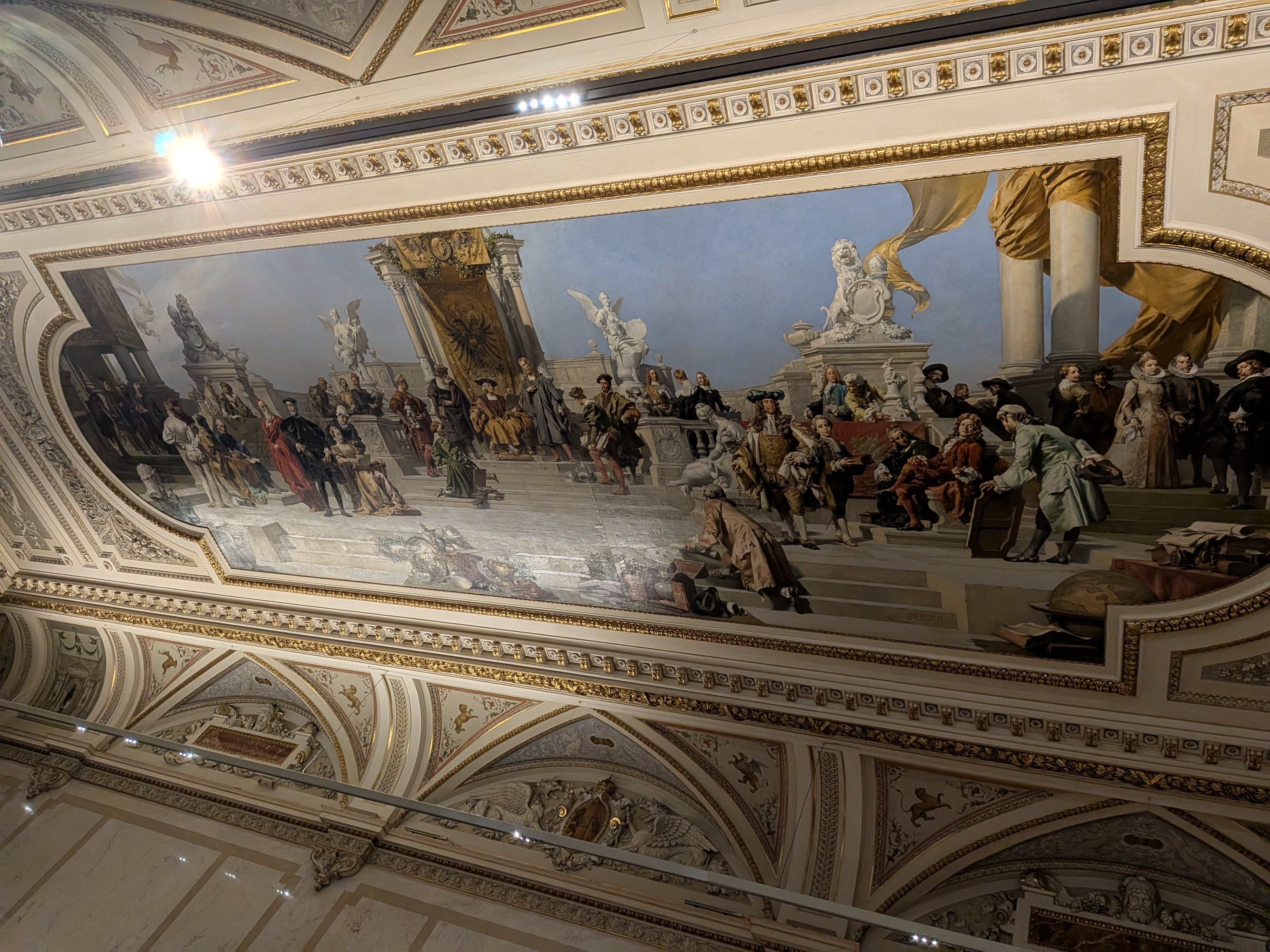
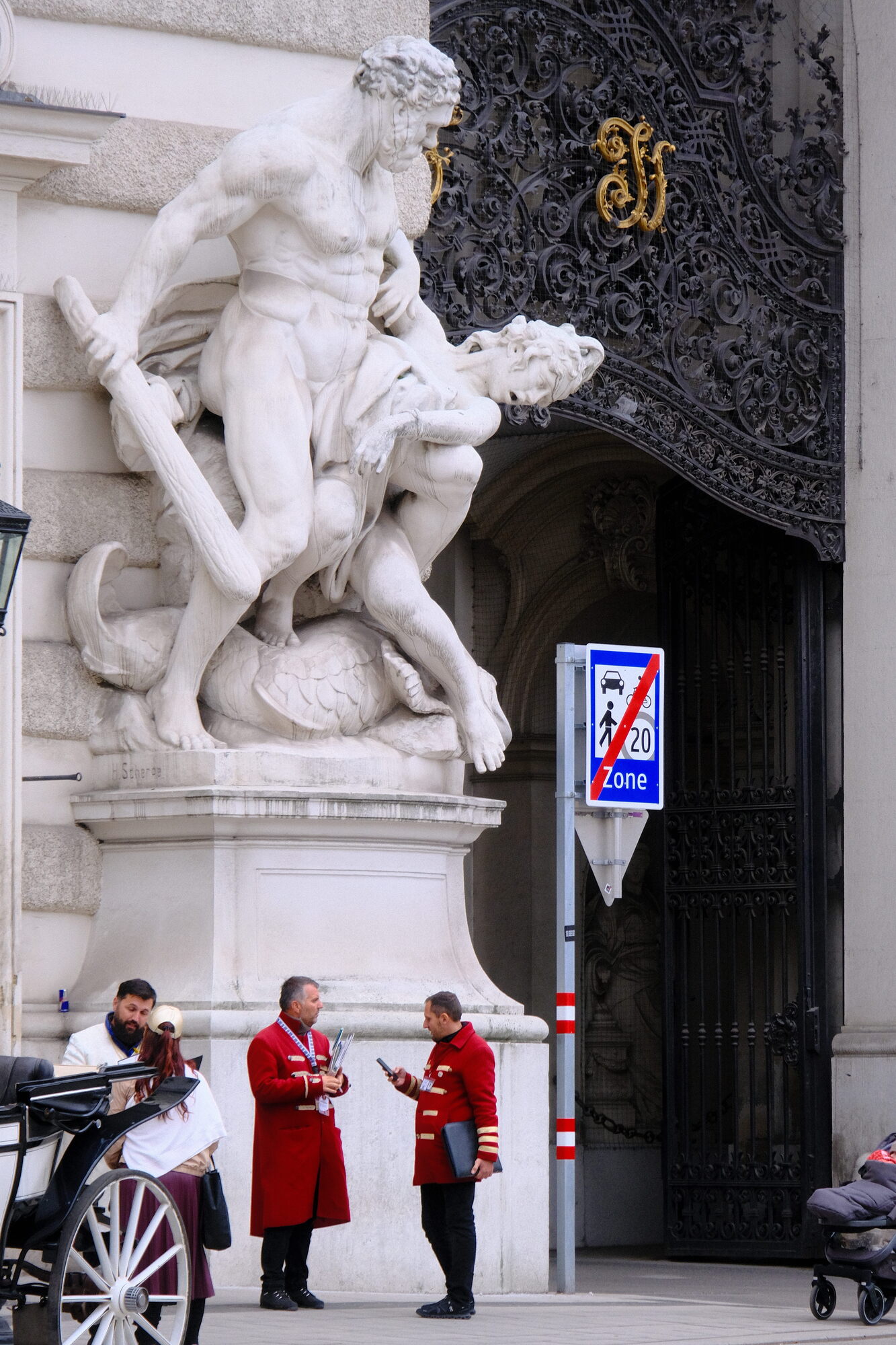
(Okay, it wasn't "one guy," there were several emperors and empresses over the years, but still, you get the idea.)
It was easy for me to forget that Austria was an imperial power with Vienna as its seat as I was ambling about, right up until I walked face-first into a palace, which is relatively easy to do because Vienna is lousy with palaces. (Not a phrase I thought I'd ever write.) In addition to the Imperial palaces (yes, palaces, plural, I kept asking my partner if the palace before us was "the" palace, to which they kept telling me there was no "the" palace, which I could not get through my head) there's also such buildings as the Palais Ferstel, originally constructed for the Austrian National Bank in 1860 to function as head office and stock exchange, it is now an event space with an interior plaza sporting a cafe, fountain, chocolatier, and an antiques shop. Making your way through the interior avenue and stepping out onto Herrengasse will put you smack-bang in one of the most picturesque slices of Vienna with horse-drawn carriages making their way up the street alongside bicycle and pedestrian traffic.
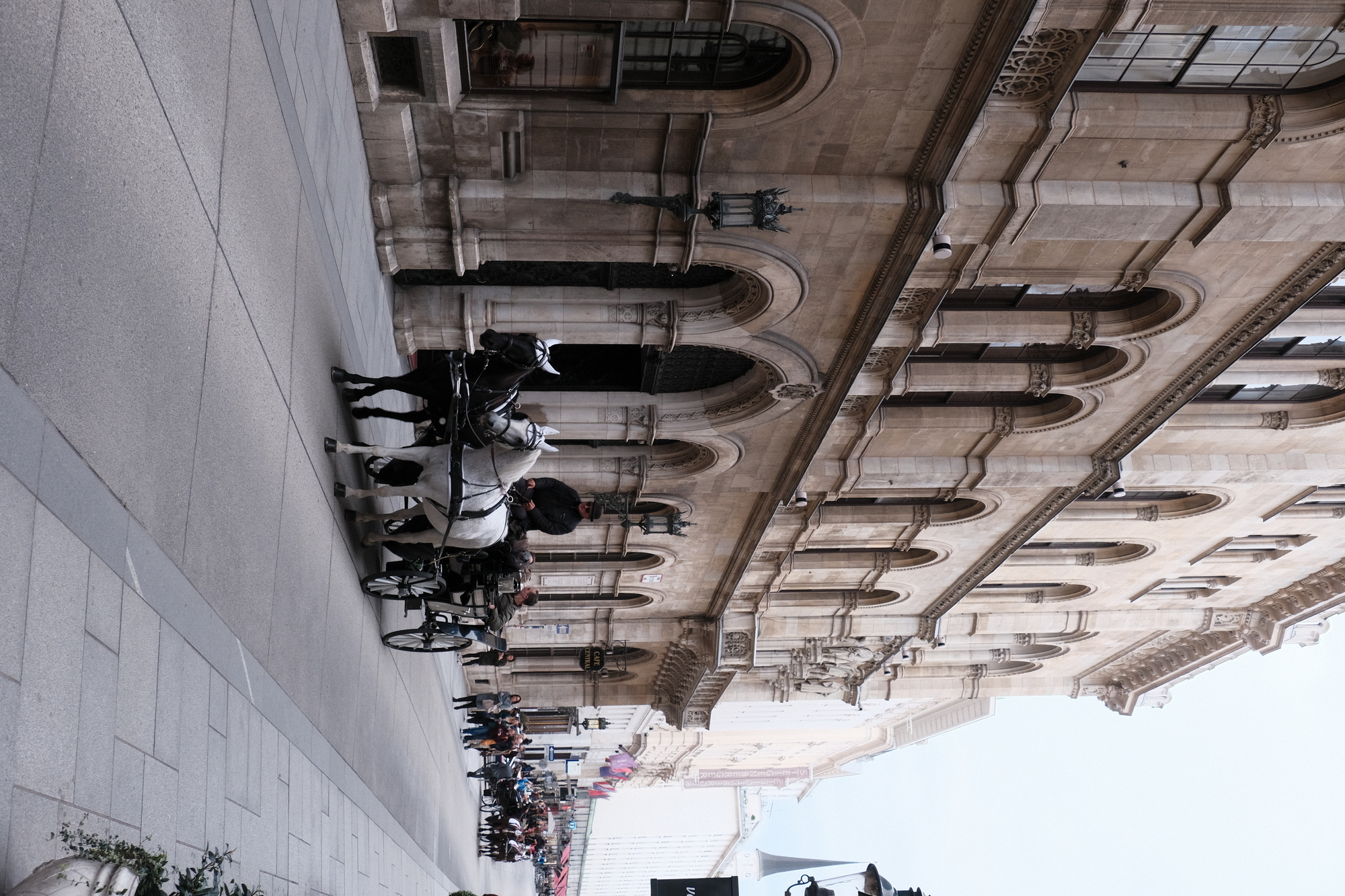
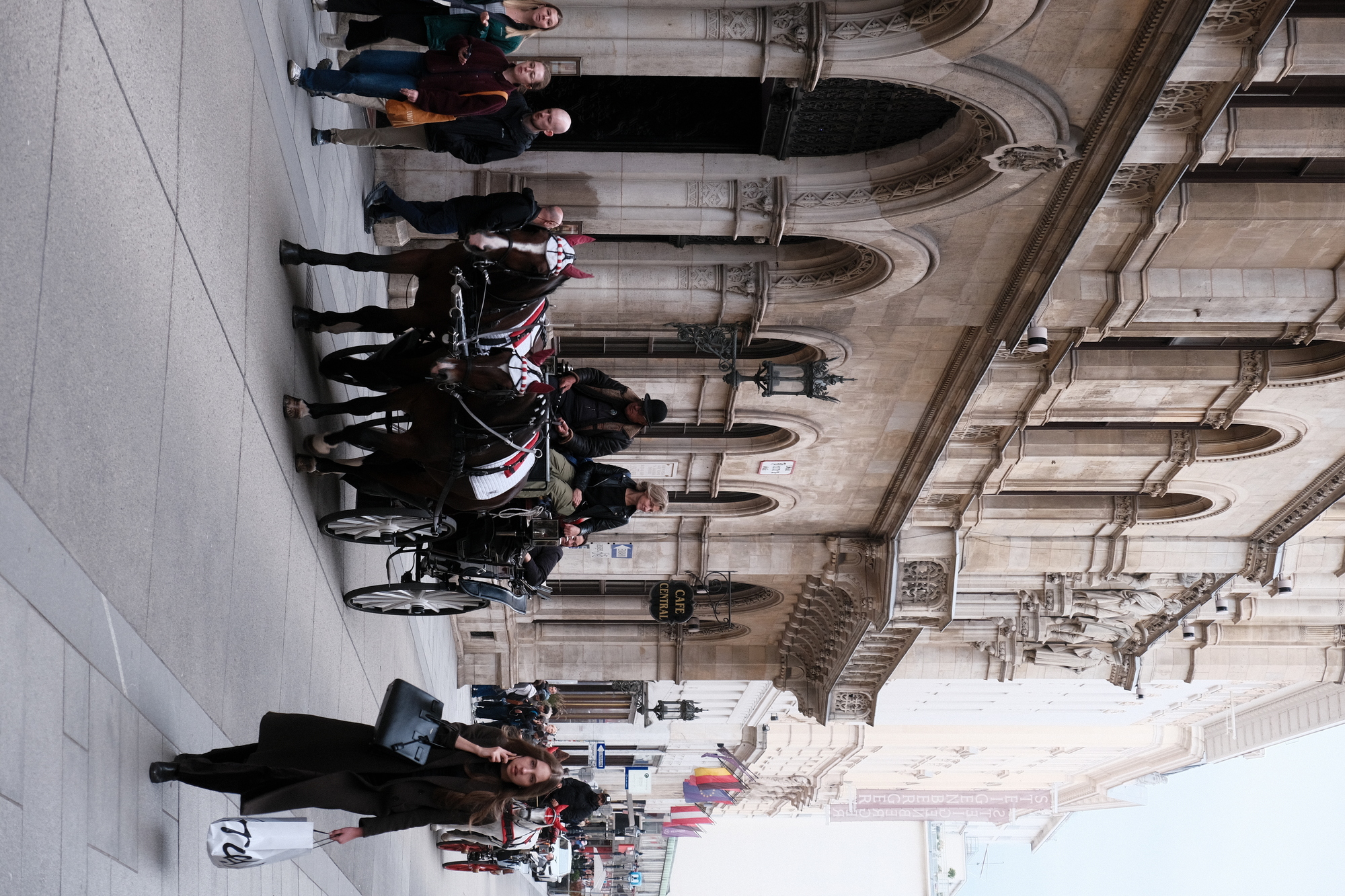
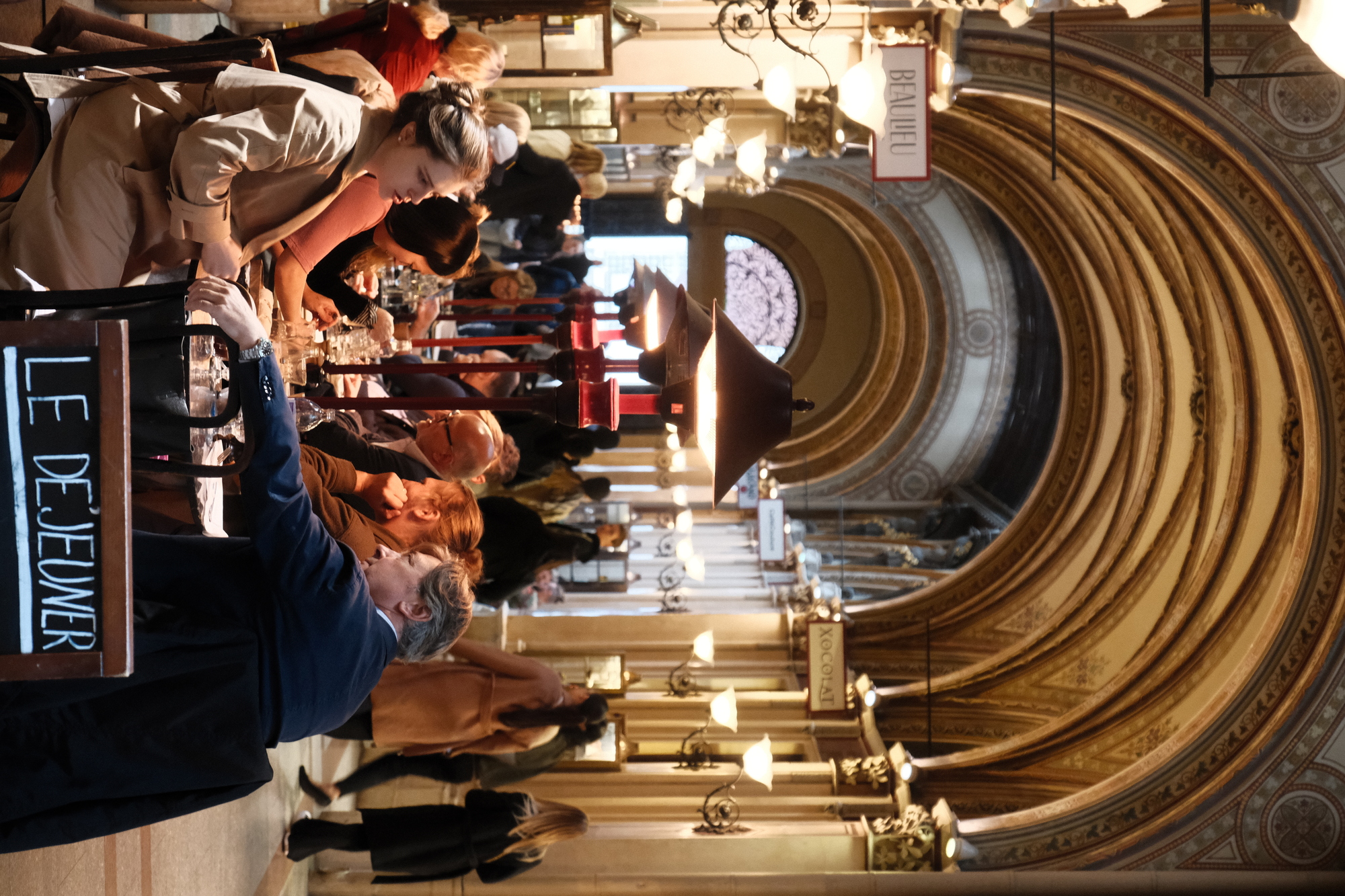
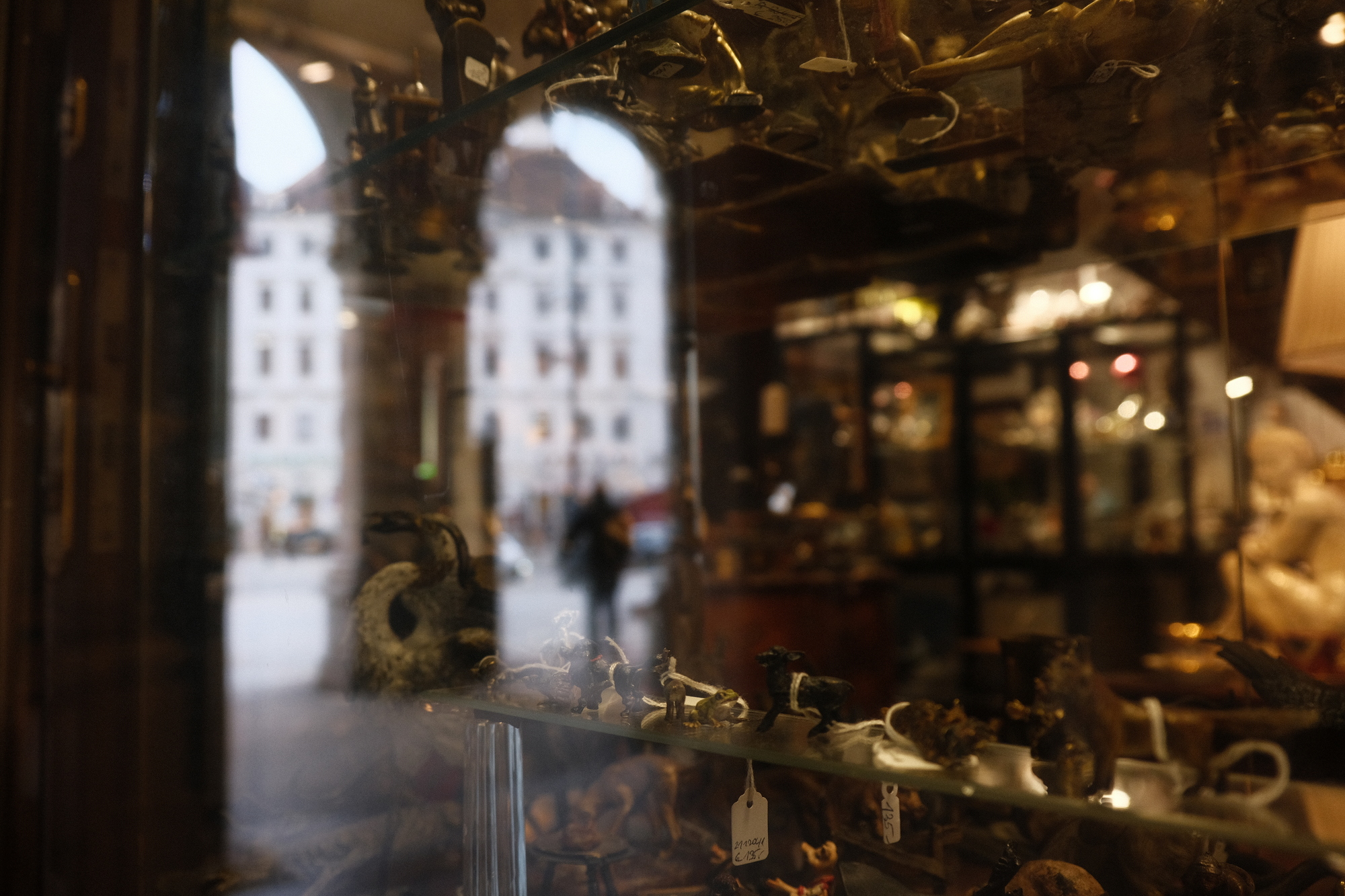
Also occasionally a delivery truck, which felt somehow anachronistic given the surrounds.
Palais Ferstel is rather modest, however, and easy to mistake for a simple indoor plaza in an otherwise beautiful building that fits in neatly with it's neighbors.
Early on in our trip we made our way to the Tiergarten Schönbrunn because I had never seen an elephant in person. As one would expect of a zoo, it had rather a bit of sprawl to it, in addition to the most architecturally enrapturing Palmenhaus.
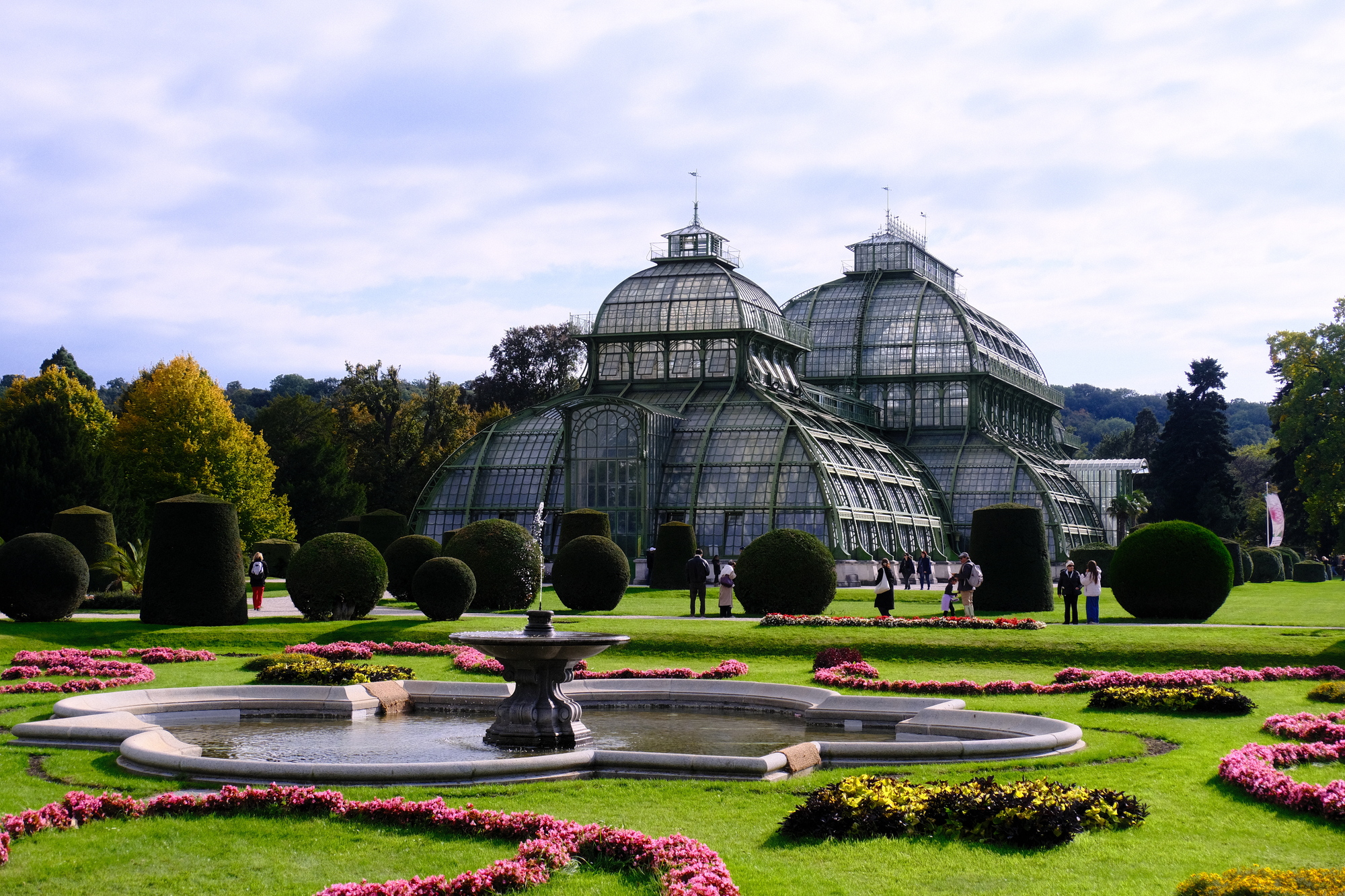
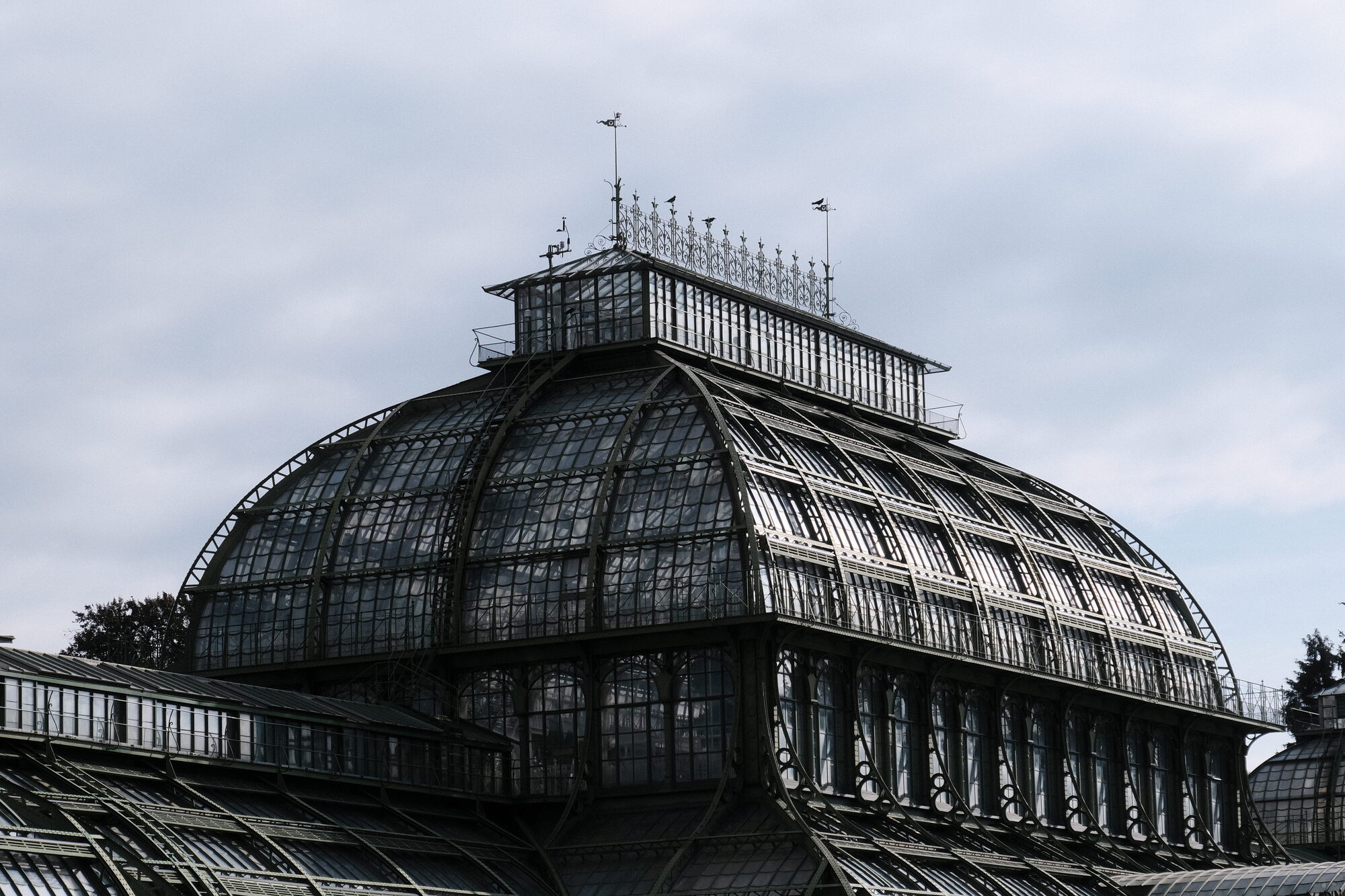
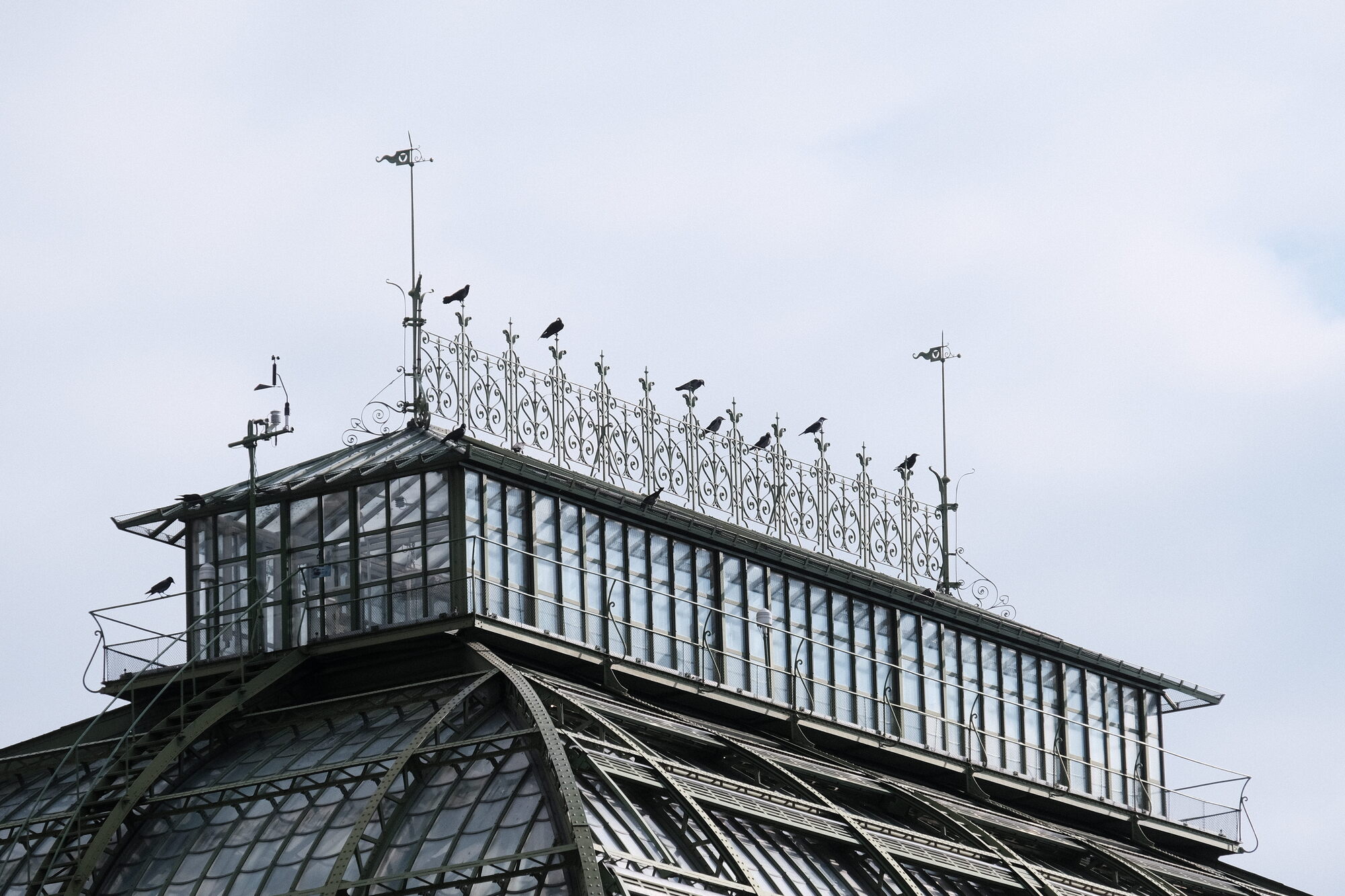
What I didn't expect of the zoo was that, geographically speaking, it sits in the backyard of the summer imperial palace. Which is to say, the palace grounds enclose Tiergarten Schönbrunn and some other stuff. So after having a lovely visit with the baby elephant and an armadillo we mistook for a pangolin (the pangolin arrives in 2026 if you would like to visit it) we went for a walk along what I thought was just a cozy chestnut-lined lane only to find ourselves in front of the stunning yet distinctly imposing Schloss Schönbrunn with the Gloriette off in the distance down a gravel lane marked with incredible statues at 10 meter intervals.

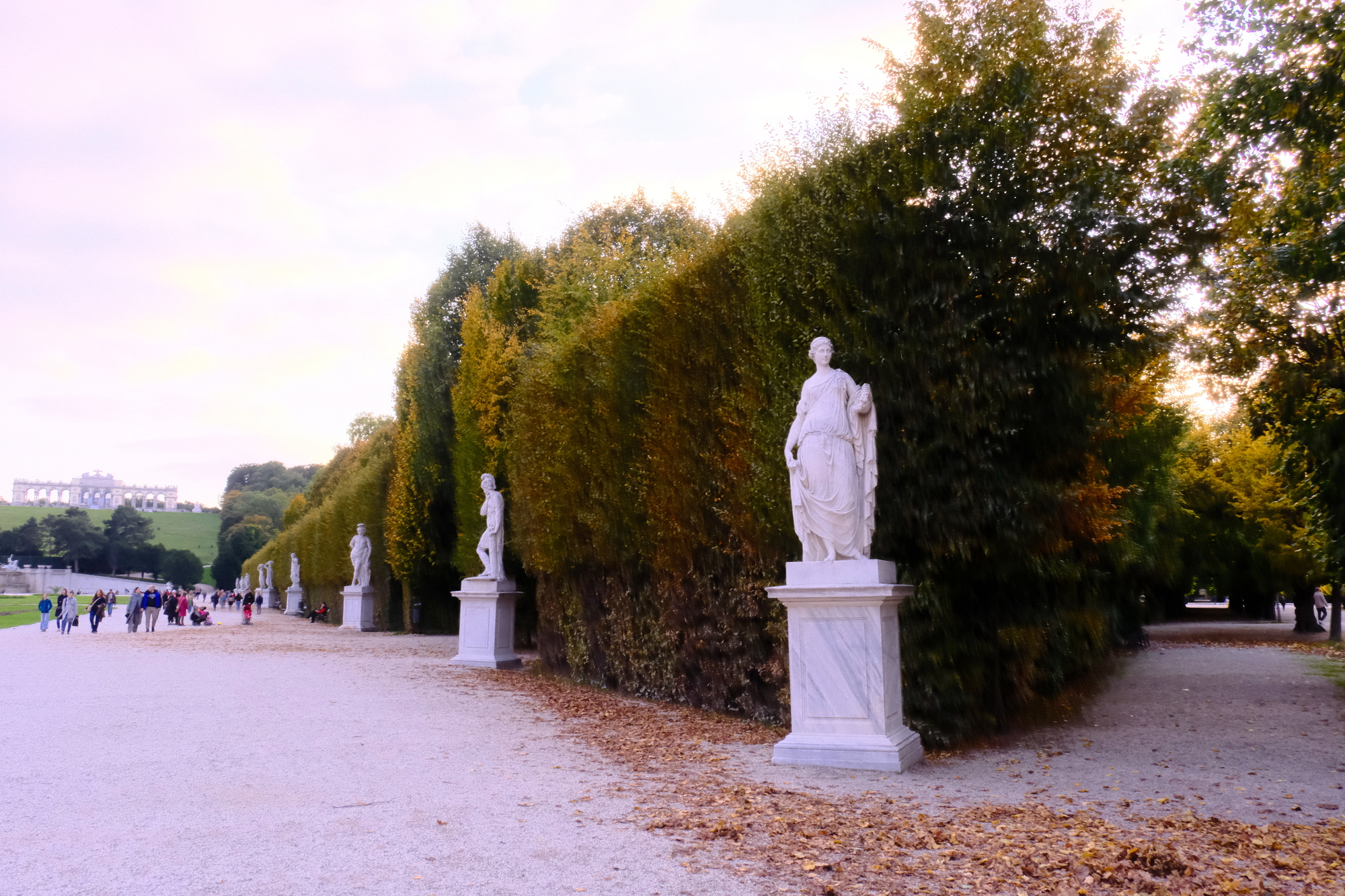
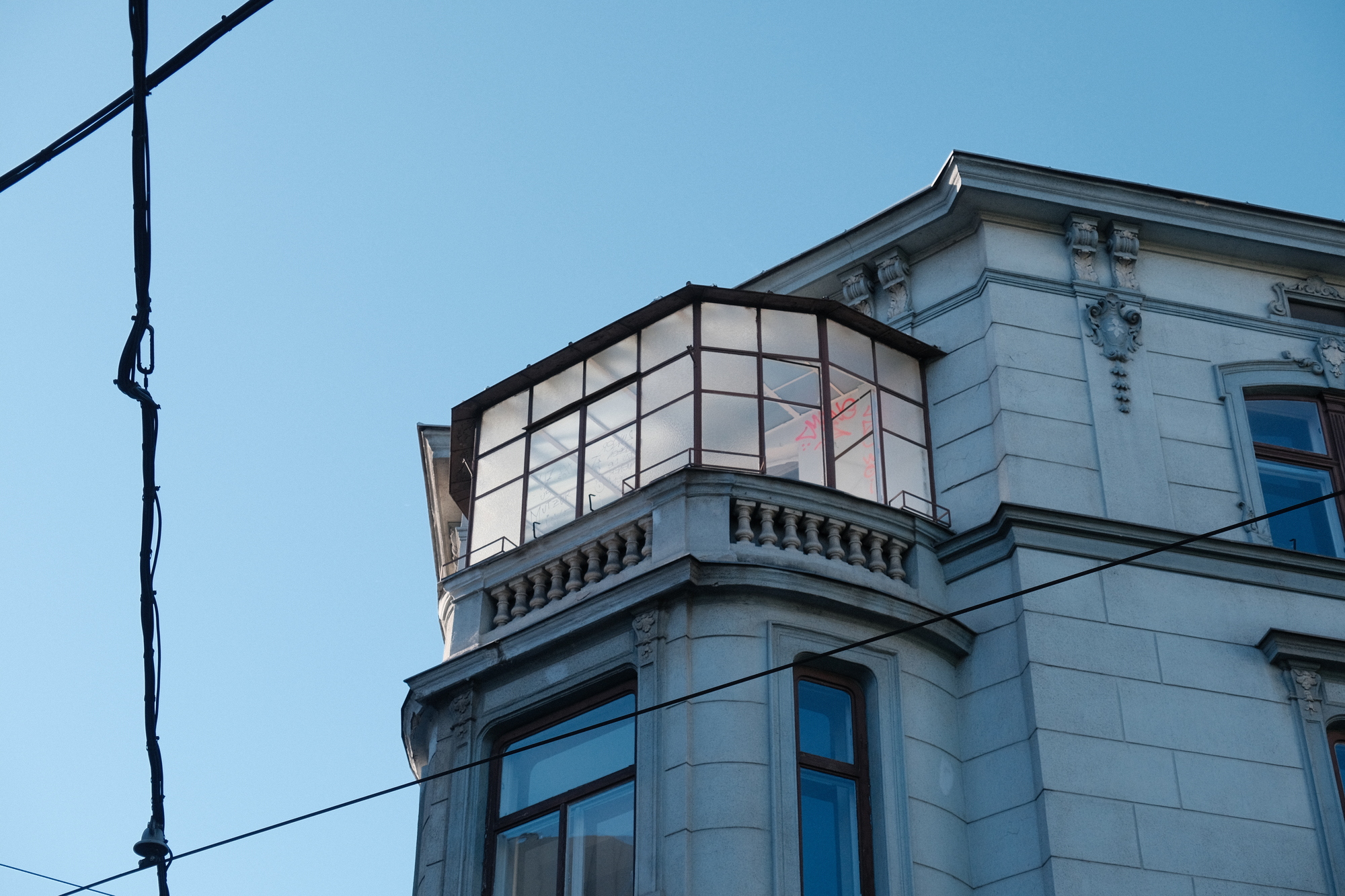
All this is to say, dear reader, that as you read through the rest of my ramblings, take care to place whatever you're imagining against a backdrop of regal stone buildings and gorgeously landscaped parks or intricate plazas with marvelous statues with an entire palace just around the corner. It's difficult for me to overstate the everpresent beauty of Vienna, the texture and character of it's shops and streets, how welcoming it feels at a human scale as it invites you to walk or sit or shop or eat.
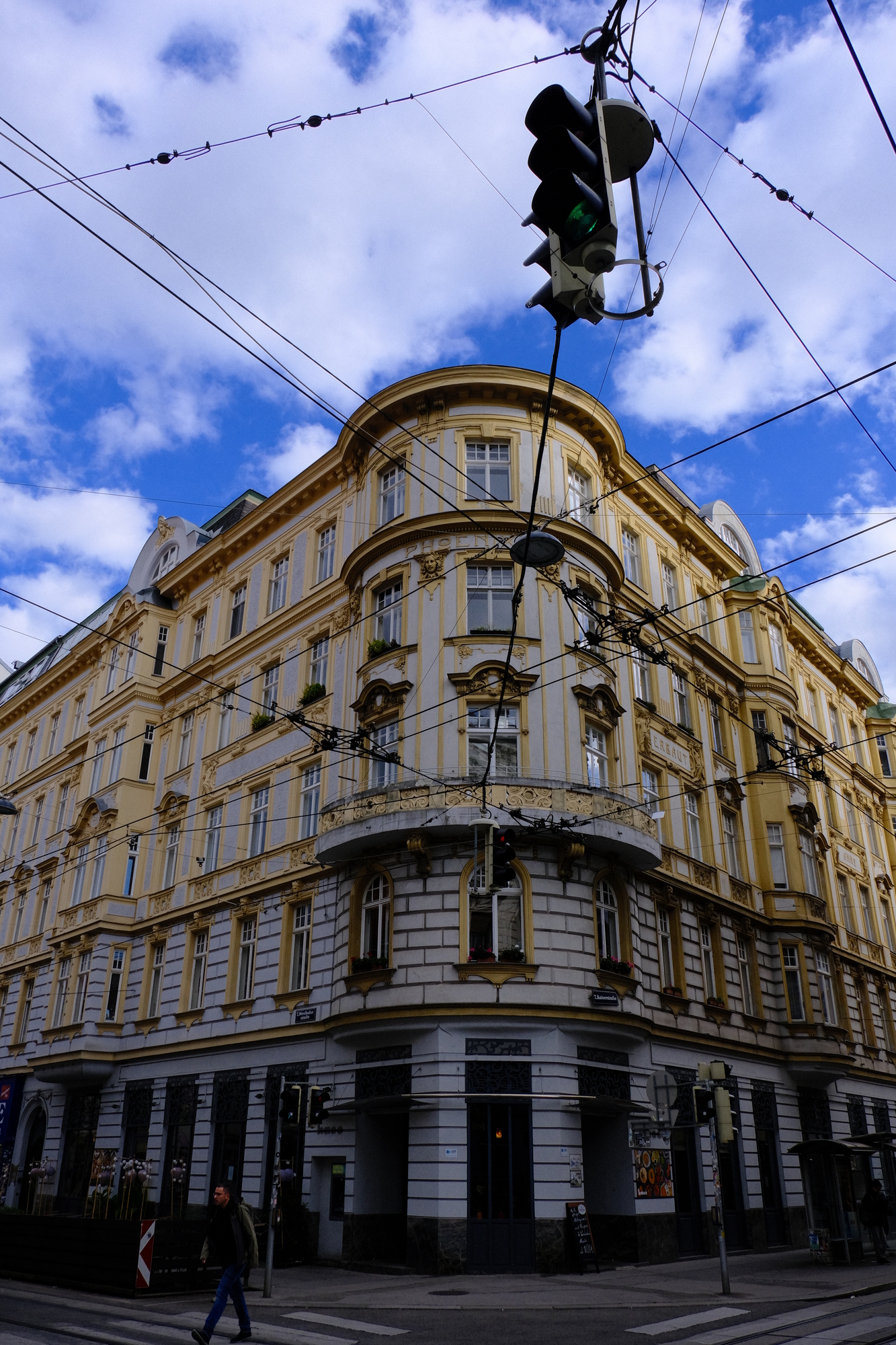
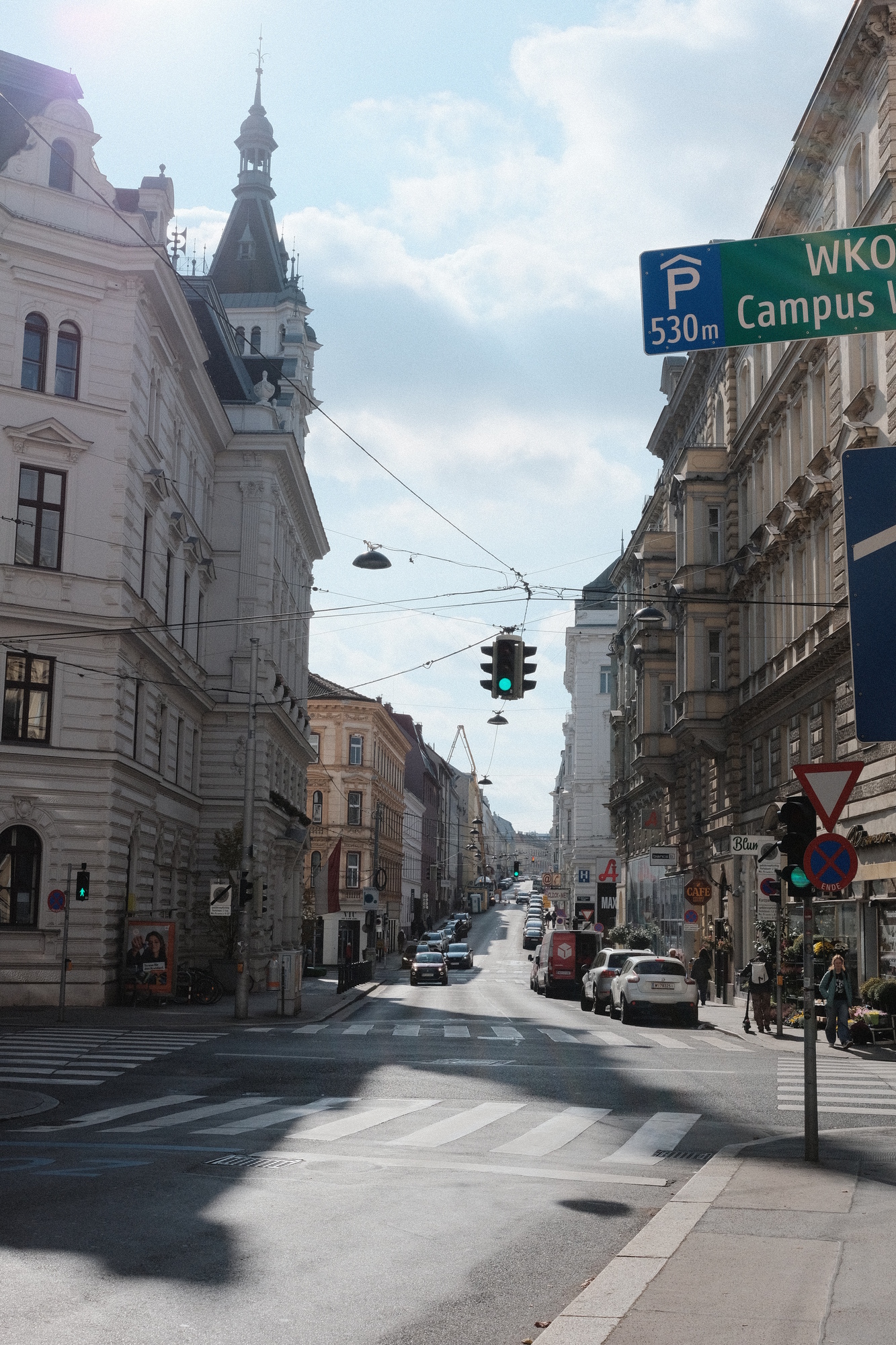
It likely also didn't help that the travel novels I chose for this trip (A Memory Called Empire and A Desolation Called Peace) were both set in an imperial court, so, y'know, some amount of bleed-through there.
Unfortunately my knowledge of world history is too typically American for me to commentate much on the actual sociopolitical implications of Austria's imperial past, so anecdotes about being dumbstruck by the omnipresent beauty in mundane and glorious things are as much as I can offer.
infrastructure, experiences of
I digress.
I found many things in Vienna that Just Made Sense. Viennese transit (trams, busses, subways) don't have turnstiles, eschewing narrow gauntlets of pass swiping and one-way exits for efficient loading and unloading of people, backed by random checks at the exit to ensure they carry a valid pass and trust in civic pride for people to not abuse the system. (When I say "random checks" I also mean "relatively rare," my Viennese partner reported only encountering about one a year when they'd lived here. Of course, the day after telling me this we ran into such a random check.) This means there's no bottleneck of people moving through turnstiles, or wrangling of baggage. You can board the busses from any door, reducing the time spent at each stop.
The transit stations are built into the city. Trams share the roads with cars yet are faster (since they have priority at intersections). There are cuboid public washrooms scattered throughout the absolutely pristine city. I was there for over a week and spent damn near all my time meandering about and only encountered broken glass in one intersection on my last day, and I never encountered anyone having decided the public spaces were best used as a restroom. Would that I could say the same about Chicago (looking at you, Roosevelt L-and-bus station.)
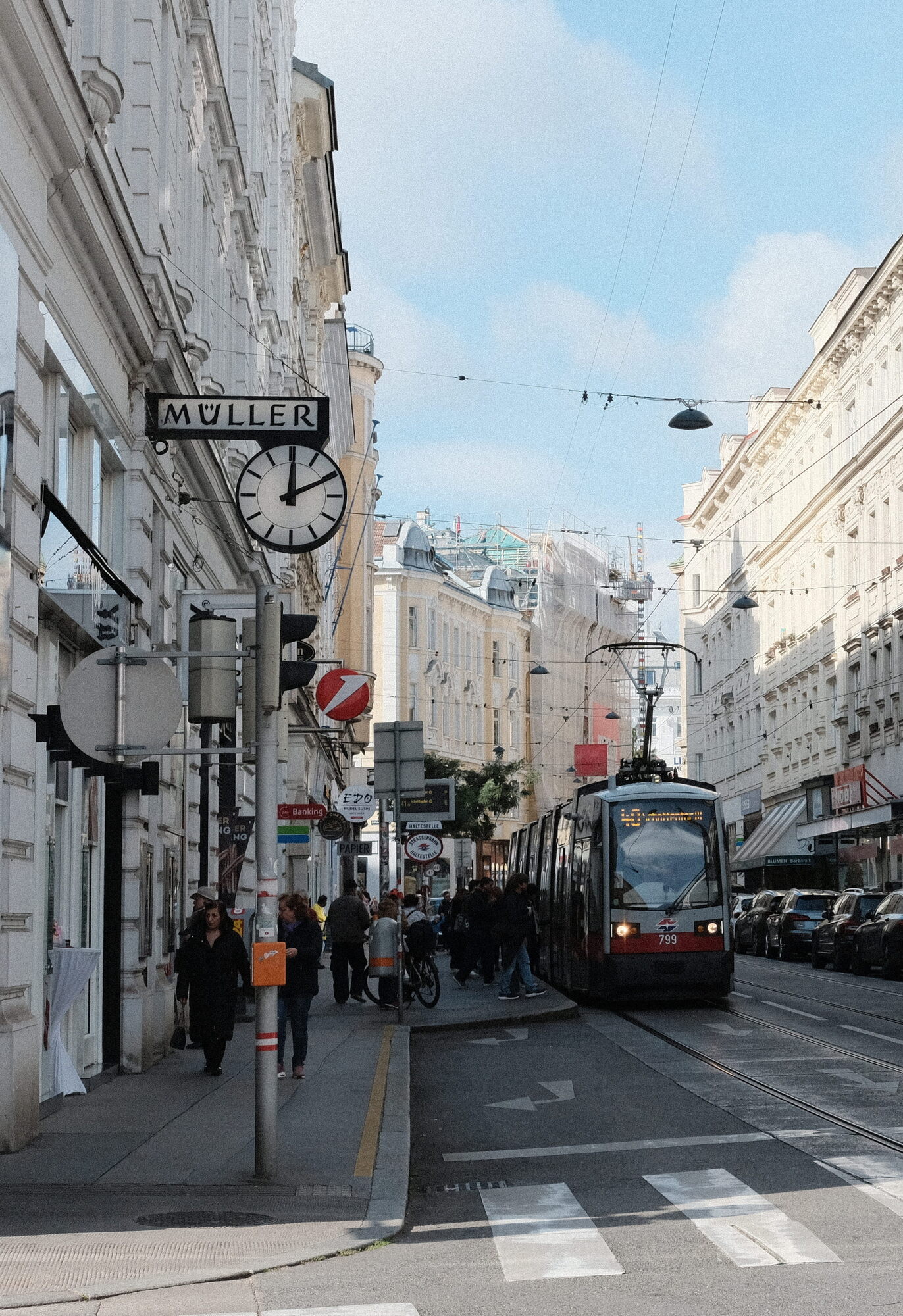
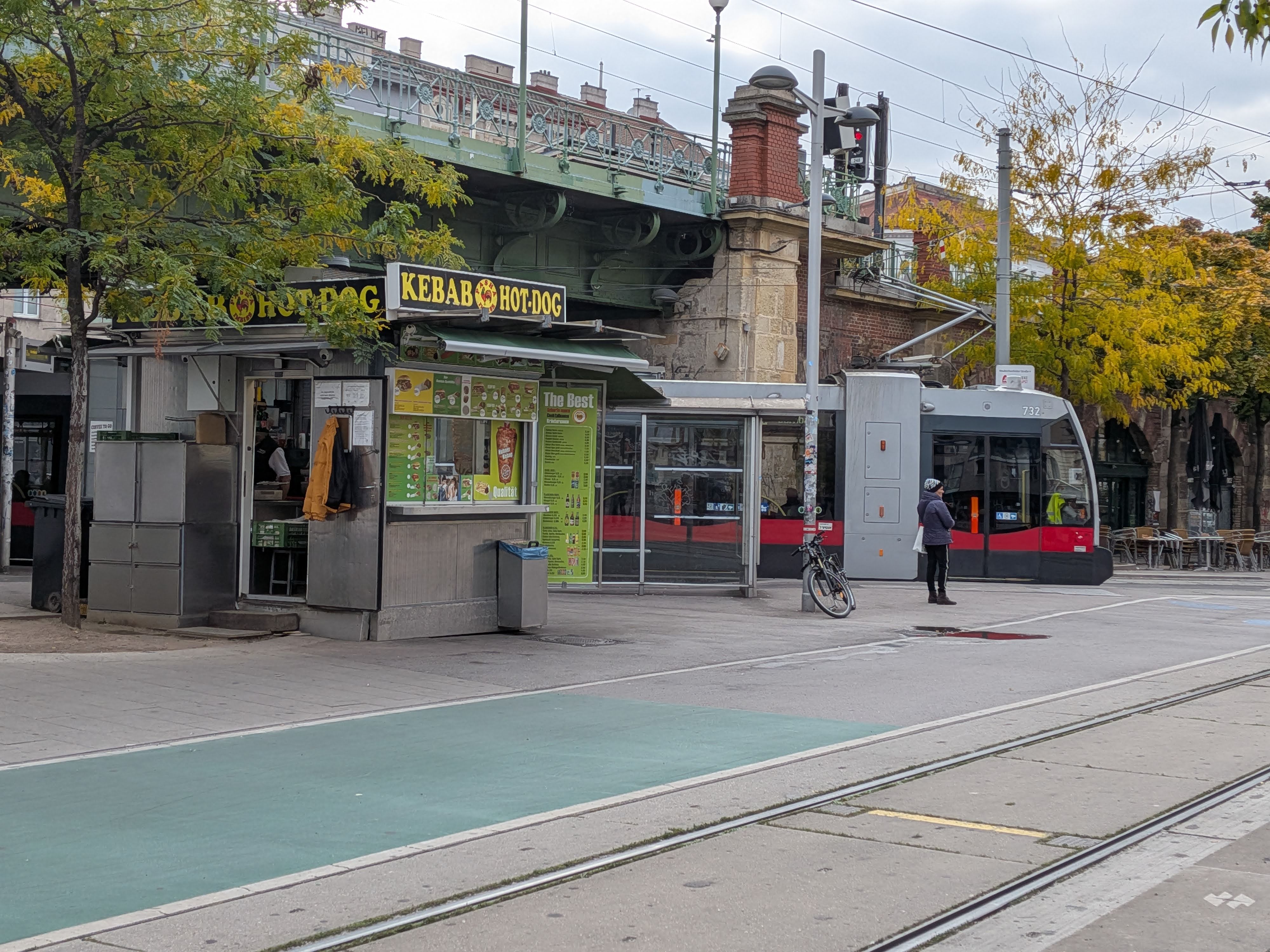
Grocery stores and butchers and bakeries abound such that you can grab ingredients for dinner on the way home, or a quick sandwich while you pick up a cut of meat over your lunch break. That is, the butchers stock bread so they can make you a quick sandwich while you stop in, which is normal enough that they maintain a few seats against the wall for you to sit and wolf down your snack.
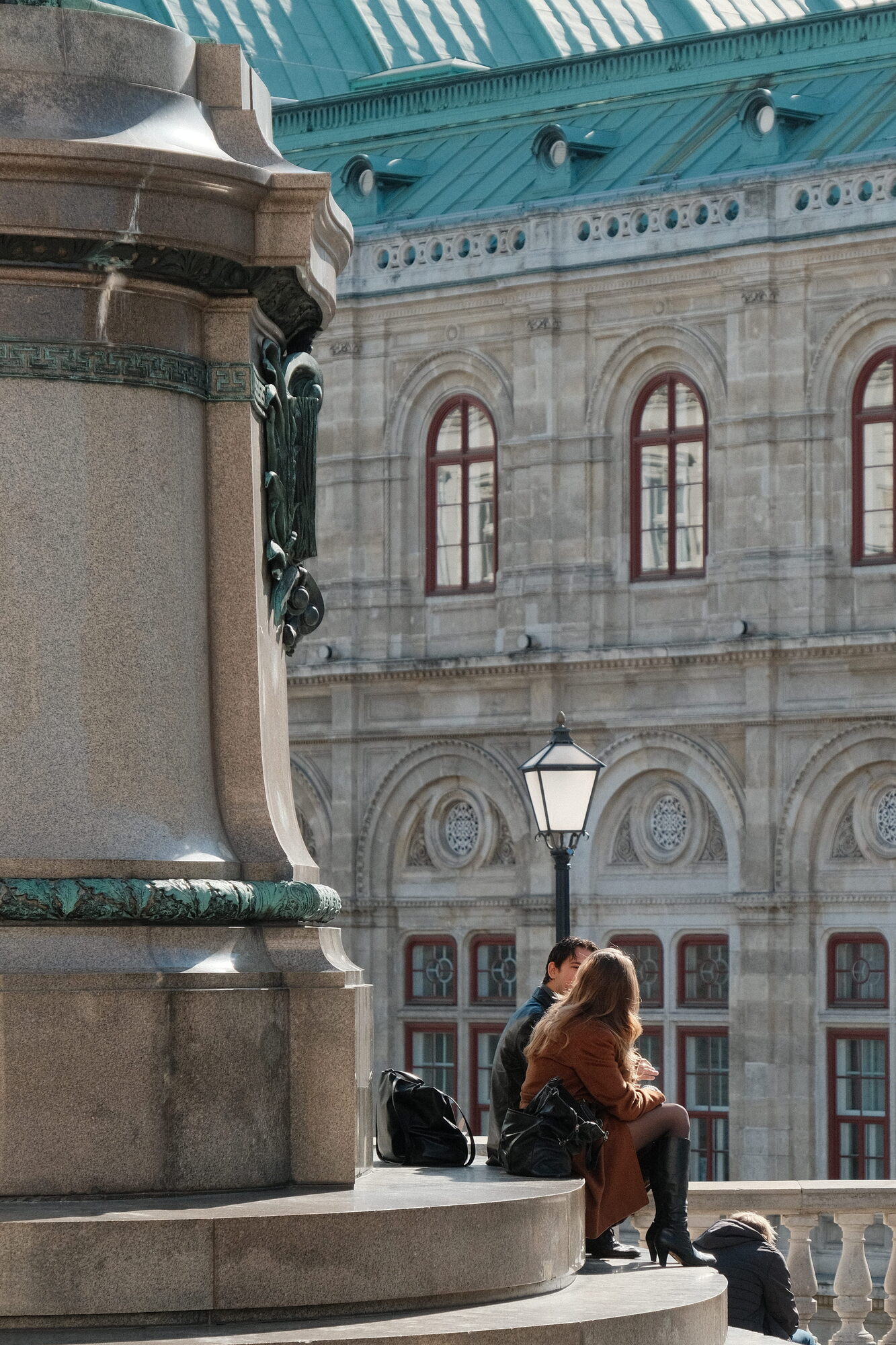
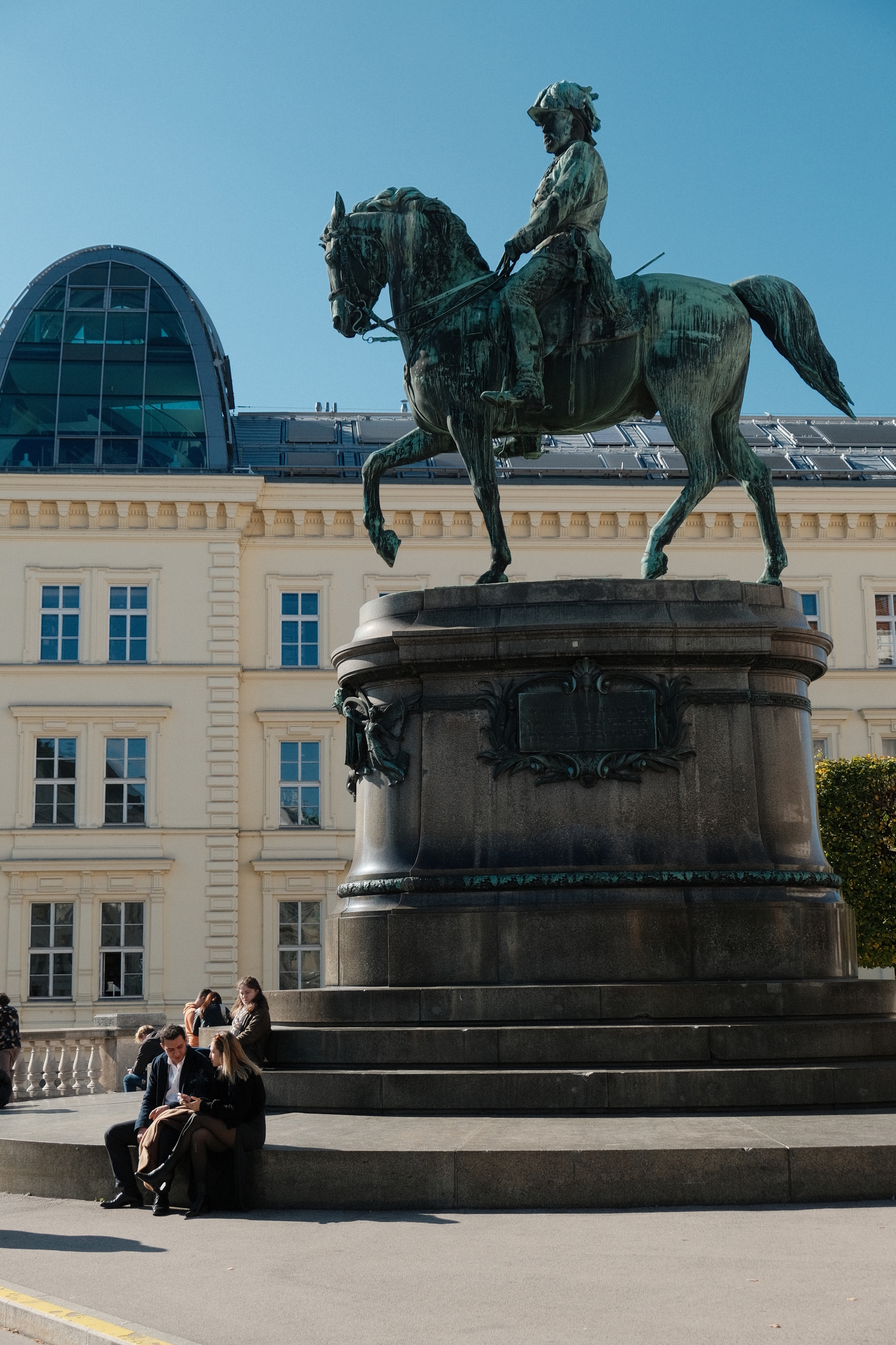
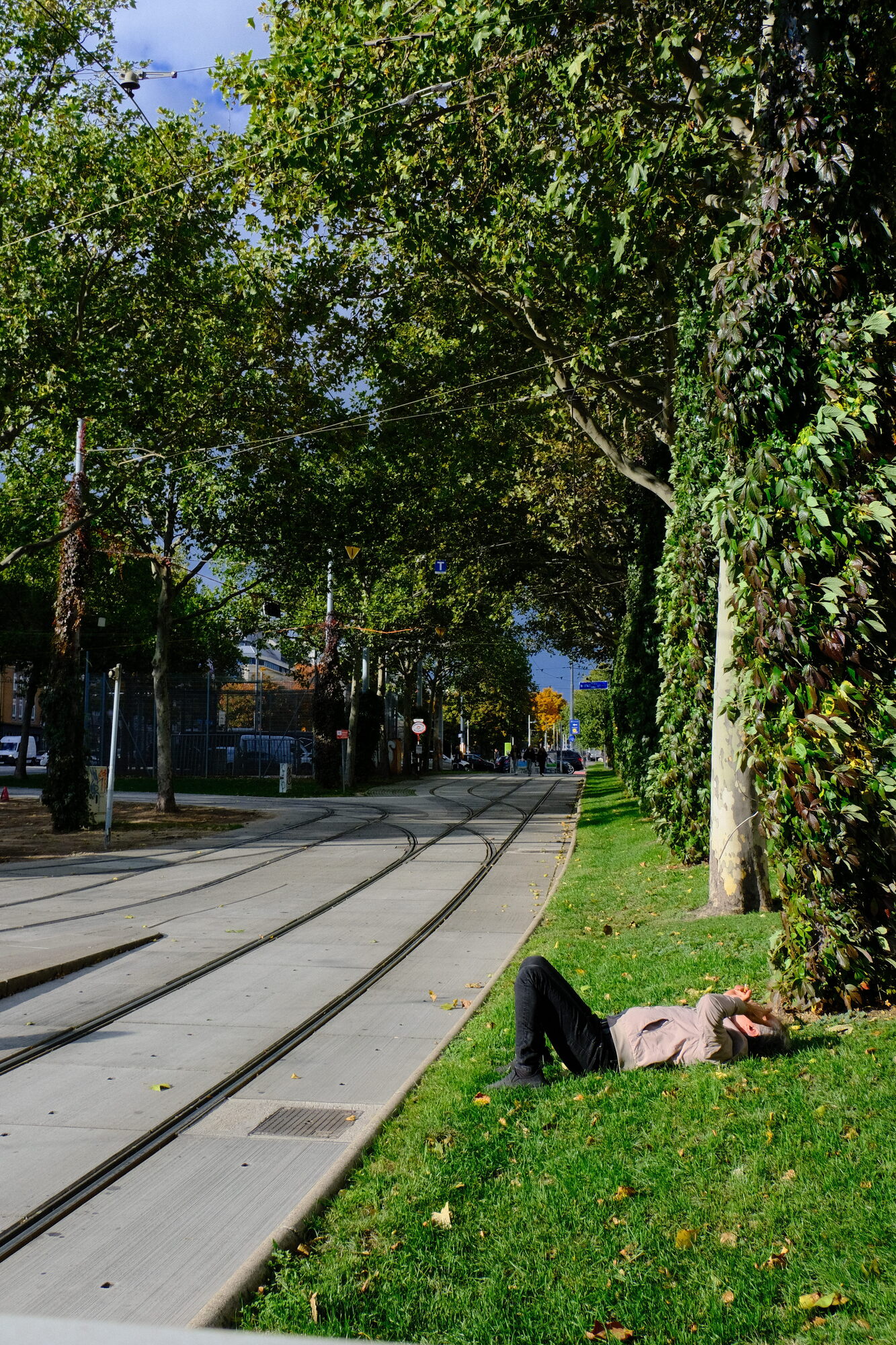
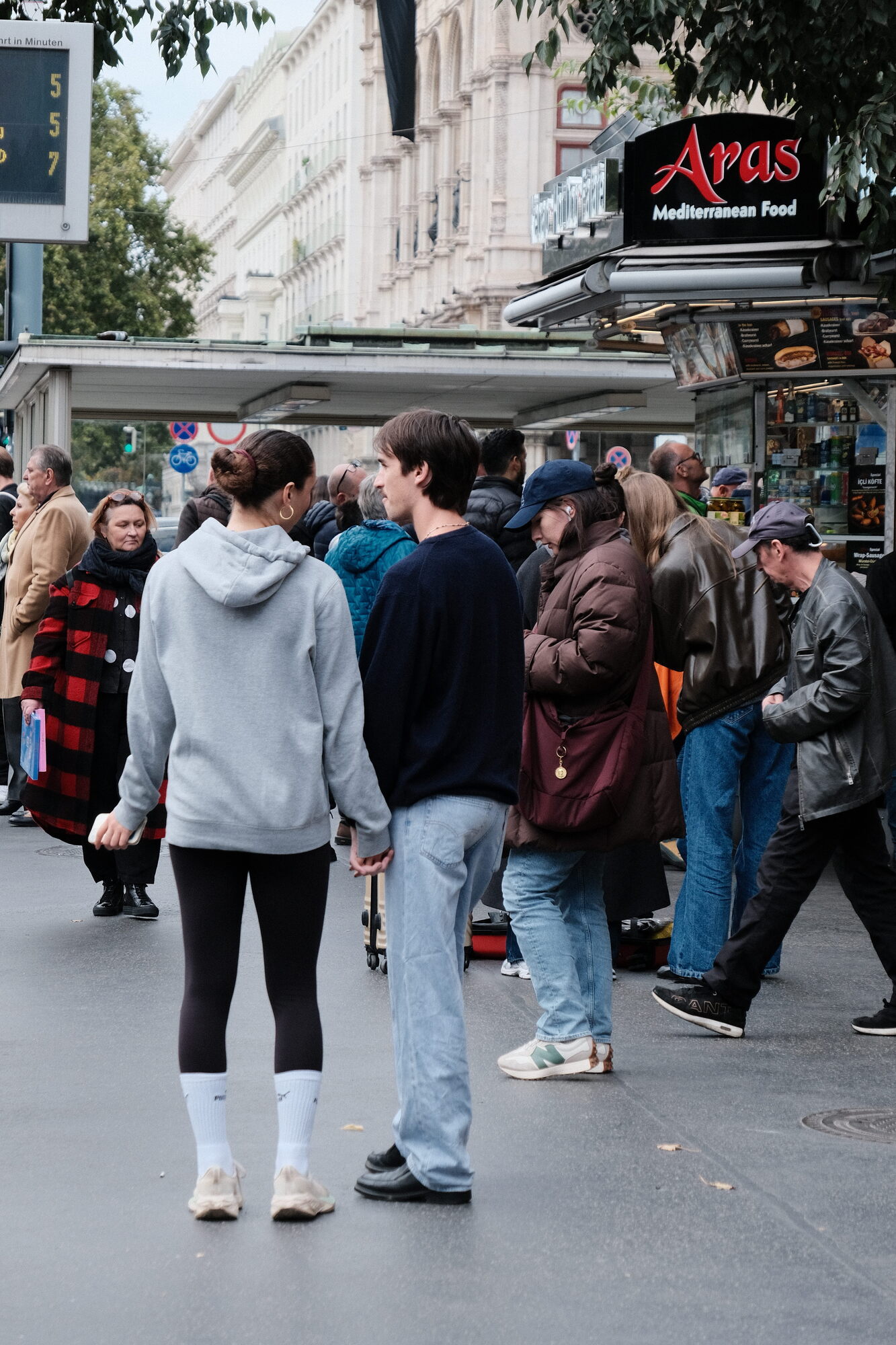
Vienna feels like a city that wants you to inhabit it. It's not devoid of hostile architecture, though I noticed much less of it than in my North American stomping grounds. There are small parks dotted throughout, replete with playgrounds and walking paths and benches for passersby. People sit in the windowsills of shops1 or take naps on the embankment of the tram tracks. Transit stops are themselves a destination, with Würstelstand and bakeries2 to satisfy the needs of a commuting populace (though you hardly have time to buy a sausage in the short five minutes at most until your next tram).
freedom of Viennese children
We visited my partner's sister and her children (two years and four) who live in an apartment about ten minutes out from the city center by tram. Their home is a fairly standard Vienna apartment: a two-bed apartment with doubleheight ceilings and fairly tight square footage (by American standards), but out the back of the second story apartment is the interior courtyard of the building, easily fifty meters to a side, entirely enclosed by the building itself.
Our hosts' kids are two of eleven in the building. All the other parents also live in apartments facing into the courtyard and it's a matter of course for them to go off on their own to find their friends and go play in the interior until they're called home to dinner. To have that independence at three is beyond comprehension to me.
Moreover, I saw schoolkids (maybe eight years old?) navigating the city on their own: crossing roads, catching trams. I met plenty of teenagers on the L in Chicago, but seeing these kids exhibit the kind of independence kindled a strange jealousy in me. What must it be like to grow up in walking distance of your friends? Or in a city safe enough and with transit robust enough you could navigate yourself to a museum or a soda shop or whatever after school activity you pleased?
I found myself awed at the amount of freedom to traverse the city I had as an adult, to have that freedom as a child is such sharp contrast to the upbringing I shared with so many other American kids it's difficult to imagine. For me, the world was a series of islands connected by car or schoolbus rides. I typically only saw my friends at school. It changed some when I turned sixteen and could drive, but there was only one car to go between me and my working parent. I would hang out or have sleepovers with friends, but it was a relatively rare occurrence, one strangely mirrored by my current adult life. I, an adult with a car and disposable income, envy the independence my pseudo-nephews already possess.
This freedom extends beyond those with our bipedal disposition as well. Dogs are welcomed on Vienna's transit system (so long as they're leashed and muzzled). They're so commonplace (and unconcerned) as to flop on the floor in the middle of the articulated section of the tram, which draws no remarks from fellow passengers. Even children don't comment. (How often do you see a kid ignore a dog?) Dogs are also welcome in the city's cafes, so long as they don't make a nuisance of themselves, which was an additional delight we got to share when we caught brunch with a friend. (I kept forgetting the dog was under the table she was so well behaved.) In Chicago your hound is welcome aboard transit only so long as they "fit" in a "carry bag," which has led to some hilarious constructions among the truly determined but mostly just means if you want to take your dog with you to your friend's house for D&D so you don't have to worry about scrambling home to get them dinner you're SOL.
Lest you think I'm just easily wowed by a city full of interesting things to do with a transit system, I used to live in downtown Chicago near Printer's Row. I am ever so used to waiting for a 22 bus that would never come in front of Flaco's on Dearborn on Halloween only to give up and call an Uber. Meanwhile if you miss the U6 train on your way to the Westlicht Photography Museum, it's fine, there will be another in literally two minutes during peak times, seven otherwise.
Westlicht photography museum, the
Travel times to Westlicht are of legitimate concern because Westlicht itself is marvelous and it sits on the very busy Westbanstrasse3. If you're wondering how to pronounce "Westlicht" it sounds a little like Sean Connery saying "Vest-licked" (though the 's' in 'vest' should remain sharp and silibant). Westlicht is home to a large collection of cameras throughout the ages, starting with the only remaining specimen of the first commercially produced camera ever (!!!) which relied on the daguerreotype process.
(If you're a photography nerd you'll know that's where an image made by exposing a silvered, light sensitive plate to light and then developing it with mercury vapor. If you're a gaming nerd but not a photography nerd, you'll remember it as that dialogue line by the weird teacher in the opening of Life Is Strange. If you're neither a photography nor gaming nerd, just trust me that it's really dang cool, mkay?)
Either way, the collection itself is a fascinating backdrop to the exhibition of the World Press Photo series, a photojournalism competition from around the world with 42 selected winners out of some 220,000 submissions. You can view the exhibition online here, though as you might imagine of a worldwide photojournalism competition the content is, as the kids say, "heavy."
Meanwhile, Westbahnstrasse is both a lovely shopping district and home to many lovely photography stores. (Coincidence? I imagine not.) I sampled none of them because I had already spent much of my budget on tasty chocolates and delightful t-shirts from Wier Im Hof, and their Leica gear is both more pretentious and less affordable than my mainstay Fuji systems. Even so it was marvelous to visit somewhere that has a "photography row" centered on a photography museum.
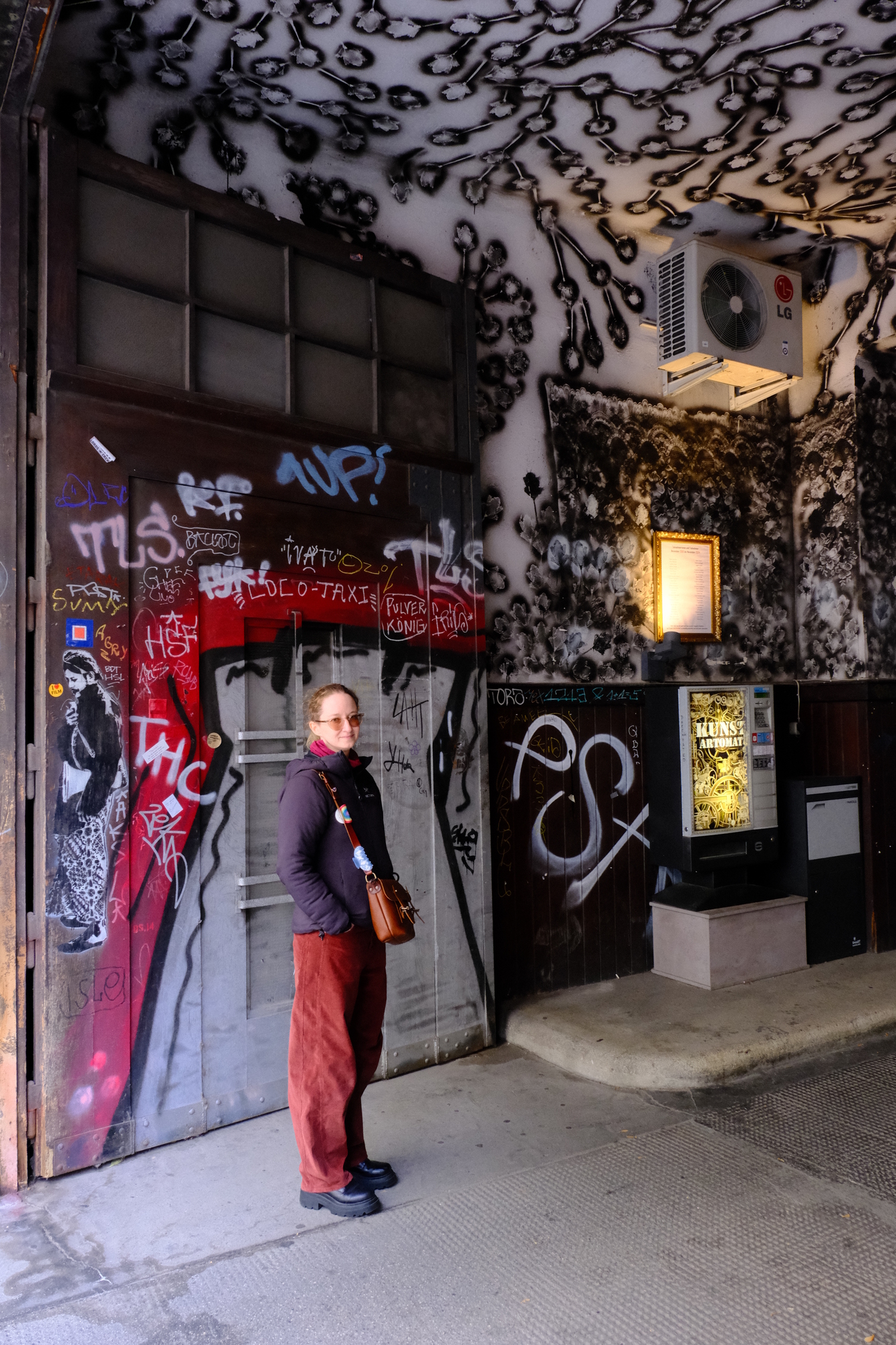
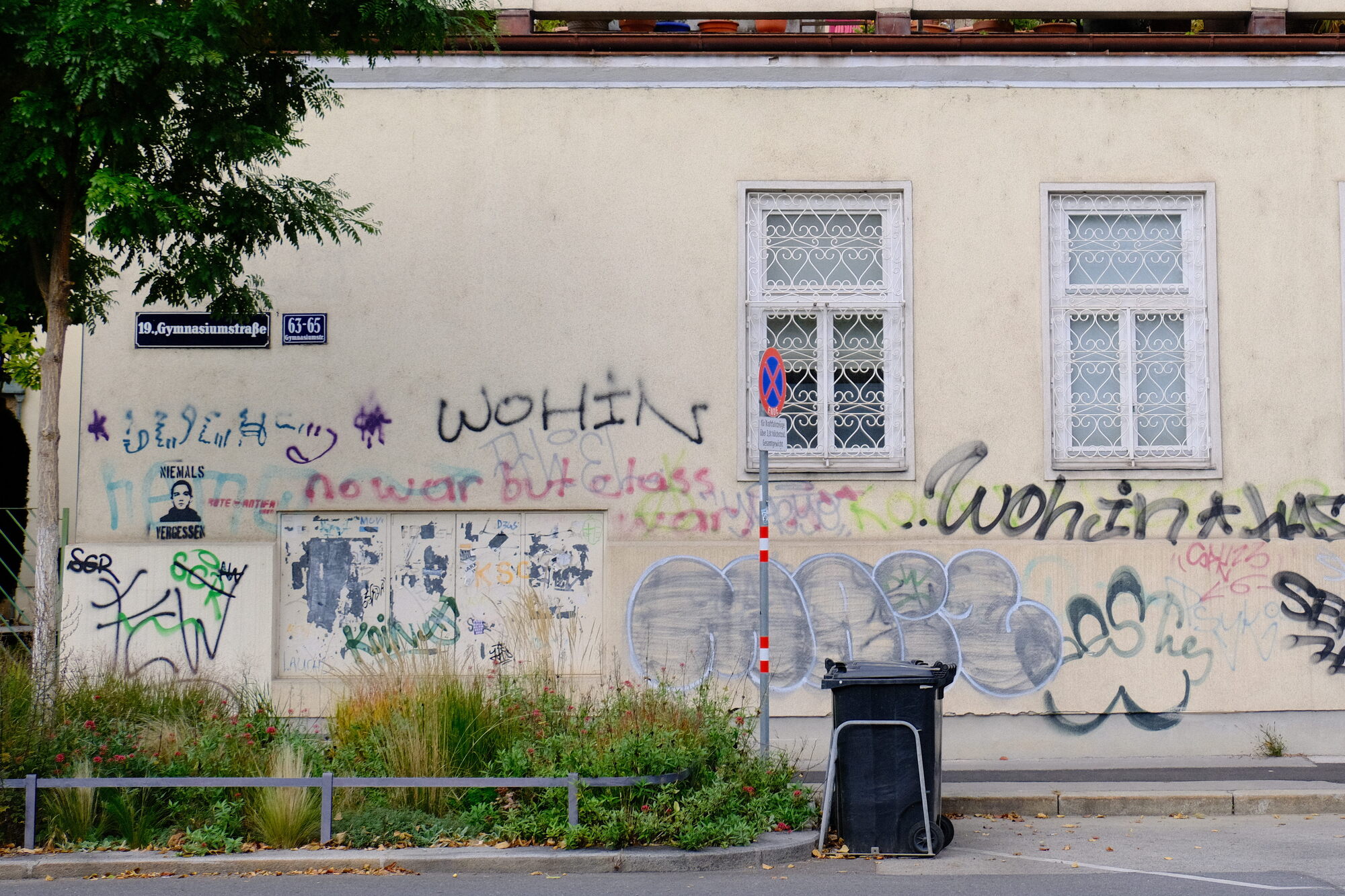
It's also home to some truly spectacular graffiti. Wien has incredible displays of graffiti, primarily along the river (which I very sadly did not get to see as much of amidst our whirlwind trip) but also on many of it's buildings and courtyards. There's a loose agreement between the artists and the city about which bits of the city can function as public canvas which, as far as détentes have gone, has been remarkably successful in covering an already stunning city in even more art. (I also want to say it's very punk rock, but on reflection there being lots of graffiti in the graffiti-allowed-zones is possibly the least punk rock bit of the experience.)
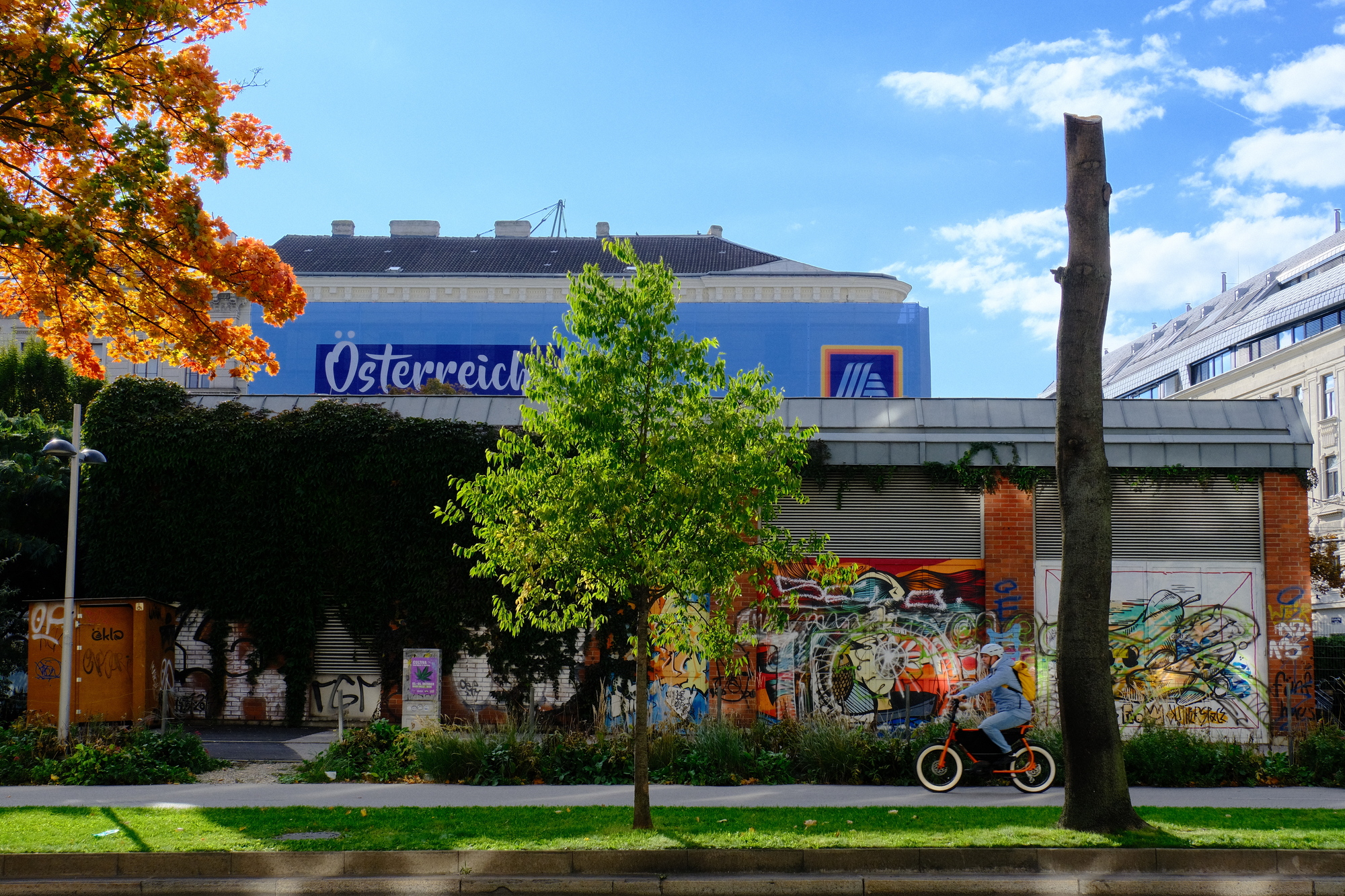
By this point, dear reader, you may be thinking that it's a bit odd of me to fixate on the things Vienna has to offer photography nerds or transit enjoyers without having remarked upon the institution it's perhaps best known for: Opera.
opera, signifiance of
Okay, okay, bear with me here. If you only know opera as a particularly silly endeavor where people warble enthusiastically at each other in ridiculous costumes, I get it, we aren't exactly exposed to much in the classical arts in the States beyond regarding it as pretentious entertainment for the rich. There's some historical context I gotta weave in here to give orchestras and operas their due respect, and if you've made it this far with me than I imagine you'll appreciate this too.
Imagine it's 1860 or so. James Clerk Maxwell has published his theories of electromagnetism that posit light and radio and x-rays are all the same kind of thing (EM waves). The phonograph comes on the scene in 1877 and quickly makes waves (thank you Thomas Edison and Alexander Graham Bell). Prior to this point (and indeed, even a bit past it), if you want to listen to music then you're going to have to find a human with an instrument and induce them to play you a tune.
By 1890 we have the first things that are starting to look like record players, and even then they're pretty janky compared to your modern hi-fi shop's Audio Technica turntable. In 1886 Heinrich Rudolf Hertz will validate Maxwell's theories by transmitting EM waves through the air, but speech wouldn't be beamed over the airwaves until 1900 and the first radio broadcast of entertainment programming wouldn't be until 1919.
We take entertainment in general and music specifically as just a part of everyday life now. The Walkman revolutionized the personal experience of music in 1979 with the ability to portably listen to your own tunes in whatever order you so pleased blasted directly into your own earholes. The iPod followed in it's tracks in 2001 in much the same way, and in it's legacy we're so used to being able to dictate exactly what we want to listen to (or watch) regardless of such mundane restrictions as our local DJ's music taste.
Each of these technological milestones was instrumental (😉) in developing the modern relationship to music. We now have little doo-dads in our pocket that can play us rock jams when we need energy to clean the house, or our favorite mopey songs when we're deep in our feelings and human company won't do. It's an absolute treasure and marvel how easy it is to listen to (and indeed, create) music in the modern era.
Now I want you to unwind all of this progress, stepping back to our dreary year of 1860. There's no radio, there's no phonograph. We're still merrily replacing gas lamps with electrical ones, the damn light bulb is recent history. You've had a crap day and your head is full of feelings you don't really want to talk to anyone about, and you fancy the kind of emotional brain-scrub that a 2010s teenager would get from blasting Linkin Park into their ears with no regard for their long-term aural health: where can you go?
Consider the glory of the opera in this era. Yeah, there's some guy down at the tavern with a violin and a tambourine who plays jigs every night over a pint, and you can get great choral hymns in the cathedral during Mass. That's amateur hour, though. Just as watching Return of the King on your rinkydink 32" TV isn't anything compared to seeing it in an Imax theater there isn't much that compares to seeing a concert in an orchestra hall. If you want to feel the music in your chest, to have your bones rattle and resonate as if you're standing amidst the storm Vivaldi is dreaming about--well, you really only have one option.
The emotion of an orchestra, the interplay between the sections, the tension in its movements all make for the perfect backdrop to a human performance. Just as a musical has interplay between music and dance and spoken lines, so does the opera. While now we hold actors and visual artists in the highest regards for their ability to capture feelings for us in performance so too does the opera singer's voice take us through the crushing depths of despair or to the peaks of joy. Just as the actor is a part of a movie so too is the singer but a part of an opera.
If you think I'm belittling the role of the singer in an opera, take it from the man himself:
I would say that in an opera the poetry must be altogether the obedient daughter of the music. Why are Italian comic operas popular everywhere – in spite of the miserable libretti? … Because the music reigns supreme, and when one listens to it all else is forgotten
— Mozart, October 1781, to his father in a private letter
(Admittedly he then does go on to say that there's nothing quite like the pairing of a a competent composer and an able poet, so y'know, grains of salt.)
My point in this, dear reader, is that The Magic Flute held a position in the culture of 1791 just as significant if not moreso than, say, Titanic did in 1997. Both were immense productions of the premire form of entertainment at the time, portrayed in incredible, specialized theaters, meant to pluck at your heartstrings and fill you with feelings, to remind you what it is to be human and to be alive in the tradition of humankind immemorial. We've always been storytellers, and opera was simply along the cutting edge of human expression in the era.
Staatsoper, the
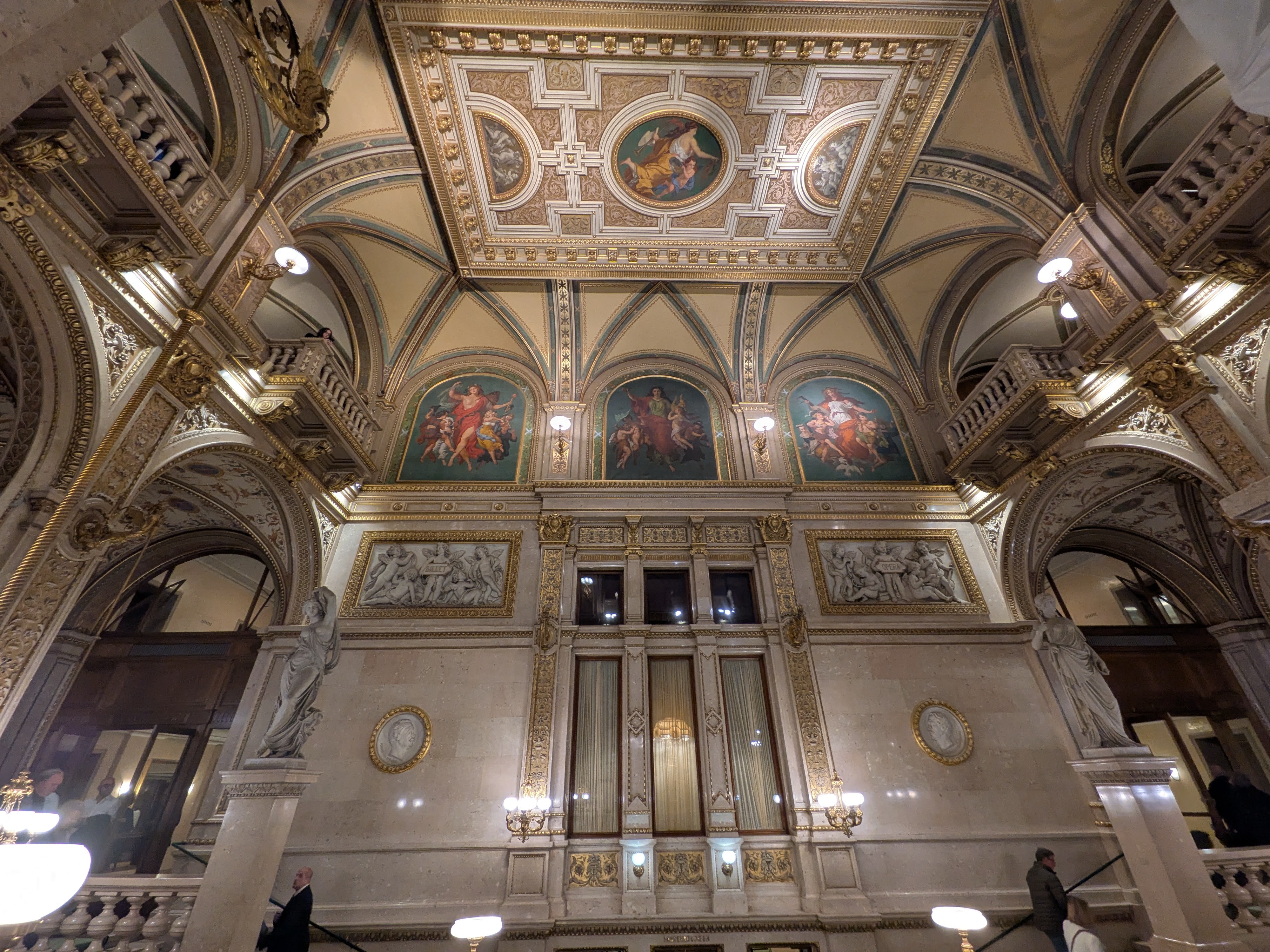
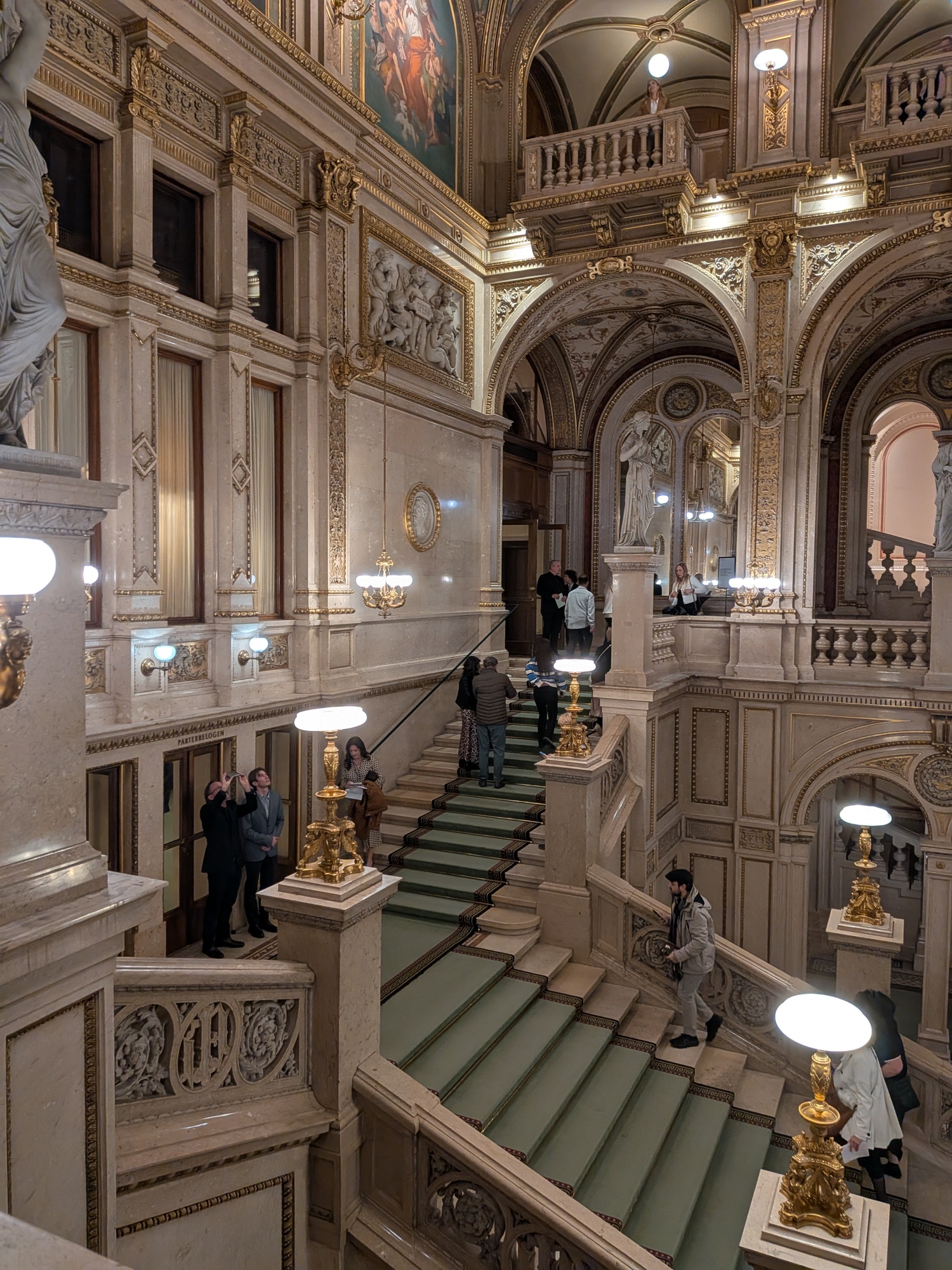
So anyway, the Staatsoper (Sean Connery again, "Schtatz-Opper") was beautiful. It was the first building to go up on the Ring Road (the previous site of the city walls before they were town down by Emperor Franz Joseph I who also built like a zillion museum) after eight years of construction, opening in 1869. It seats 1700 and has standing room for another ~550, and like every other building I saw in Vienna, was a work of art unto itself. The Schwindfoyer (named after Moritz von Schwind, a painter) contains marvelous carved busts of famous composers and conductors, including Mozart, Strauss, and Mahler. There are intricate inlays and embellishments on the walls, balustrades, domed ceilings, damn near any surface you're not going to sit on. Beautiful paintings lie in arched frames just beneath the soaring ceilings of musicians and actors surrounded by angelic children, dagger-wielding knaves visible in the background; the building itself just as dramatic and incredible as the art form it enshrines.
I did not, in fact, see The Magic Flute, the perennial , but instead Die Entführung aus dem Serail composed by Mozart, a delightful and irreverent comedy that featured a hilarious duet in chicken costumes at the opening of the second act. (It was about at this point that I leaned over to my partner and said "I think I'm starting to get the Viennese sense of humor.") It was silly yet evocative, underscored with absurdity.
The plot of The Abduction from the Seraglio is uncomplicated and not particularly clever but the music is wonderful and the characters are enjoyable. The version we saw decomposed each character into a singer and an actor which added a fun meta-ego level of interaction that would have made Freud do a spittake. It was also very impressive how well they fit nine people on the stage during the big scenes while preserving the interplay and flow of characters.
There was something wonderful about seeing an opera that dates back to 1781 in a building built to honor the art form. Though the Staatsoper no longer requires a strictly formal dress code much of the audience was dressed well enough to have fit in at court in the Staatsoper's heyday. Gorgeous dresses, handsome jackets, the swirl of people mirroring the swirl of drinks in crystal glasses. It's not so hard to imagine what it might have been like a two or three centuries ago amidst the beautiful courtiers of the Empire.
impressions, reprise
So: My impressions of Wien, as best I can render against all of this backdrop.
Wien is a place that values the simple human experience of being alive and recognizes the joy of living amidst beauty.
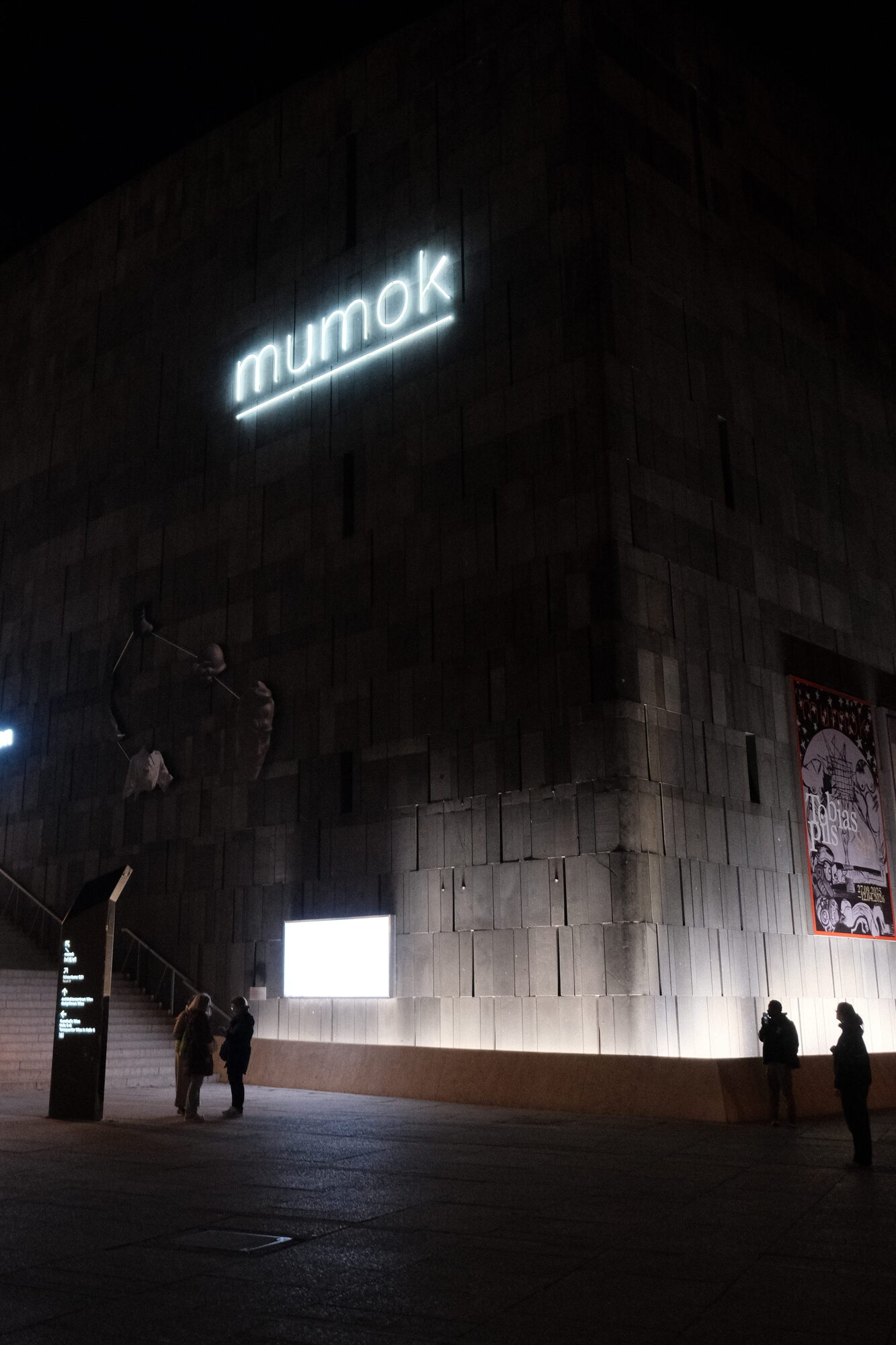
The older sections of the city are replete with pillars and statues, carved inlays and brooding gargoyles, monumental statues and intricate arches. More modern architecture embraces absurdity and shatters molds, from the Museum of Modern Art to the Kunsthaus to the Spittelau Incinerator (the aforementioned trash-eating power plant), adorned with an enormous hat, and all of it is interwoven with modern, practical infrastructure.


Wien and its populace invest tremendous resources and energy in keeping their city lovely and enabling an everyday quality of life I haven't found in North America yet. It's difficult to grasp how pervasive the civic-mindedness is until you're staring at a set of no less than six toy trash-recyling-compost-glass bins that (I'm told) they handed out at the trash festival, set atop a child's play kitchen, or how little trash there was in any of the busy public spaces I journeyed through.
I know Wien and Austria and the rest of Europe have flaws. I got plenty of commentary on the "deeply unserious" local and national politics during my visit and I'm told that any decent career in the city is more a matter of who you know than what you can do. (I would contend that neither of these are unique qualities to Vienna and, indeed, I can find plenty of examples of the United States' own deeply unserious politics and aversion to meritocracy, but I suspect this is one of those contrasts I would come to understand more with time.)
I wish I'd had the time to experience more of Vienna's political scene. There was potent implication in the amount of charged graffiti I saw, decrying cars and certain American cults-of-personality (though that made up very little of the volume of graffiti in total, but disproportionately much of that which was in English, and thus that I could read).
I'd been playfully warned about the infamous surly Viennese cafe waiter archetype, but I found every one I spoke to lovely and even enthusiastic. I had two instances at different restaurants where a waitress translated the entire menu for me with suggestions and commentary. (One was the fellow American I mentioned above, but still.)
I hope I make it back soon, though I certainly won't begrudge more opportunity for me to practice my German in the meantime.
errata
2025-12-26 'expat' -> 'immigrant'
In the original version of this post I described myself (and the waitress I met) as "expats". A friend flagged to me that 'expat' is used to avoid labeling white people as 'immigrants.' I've updated references to myself to be 'immigrant' and to my interaction with the waitress to be 'American(s)' accordingly.
I reserve the right to have more thoughts and commentary on this in the future.
footnotes
Bakeries are a whole thing in Vienna. When I say "transit station bakery" my Chicago peeps are gonna think "Dunkin Donuts" or at best "Stan's donuts." I do not mean Dunkin or Stans, I mean a bakery with quality breads and sandwiches and coffee that would blow 2010 Panera out of the damn water, packed into a teensy little stand that's directly on the path from the stairs to the train, or part of the shelter of your tram stop. Vienna friends: please don't hate me for comparing your fine city's cafe stands to a fail(ed/ing) and pretentious American bakery franchise. I'm working with what I've got, here.
Pronounced "Vest-Bahn-Strahsse", and it's important to not sound like Sean Connery: The "ess" sounds must remain as sibilant as possible.
admittedly, this is not unique to Vienna; I saw much windowsill-sitting in my trek across the UK a year and change ago too. I think it's mostly just a not-North-America thing, but maybe I've just hung out in the wrong neighborhoods.
Honestly I'd say I'm more of a hobbyist street photographer, but that term has become so overloaded these days, and I don't want to sound like I'm necessarily Trying To Do Deep Art.